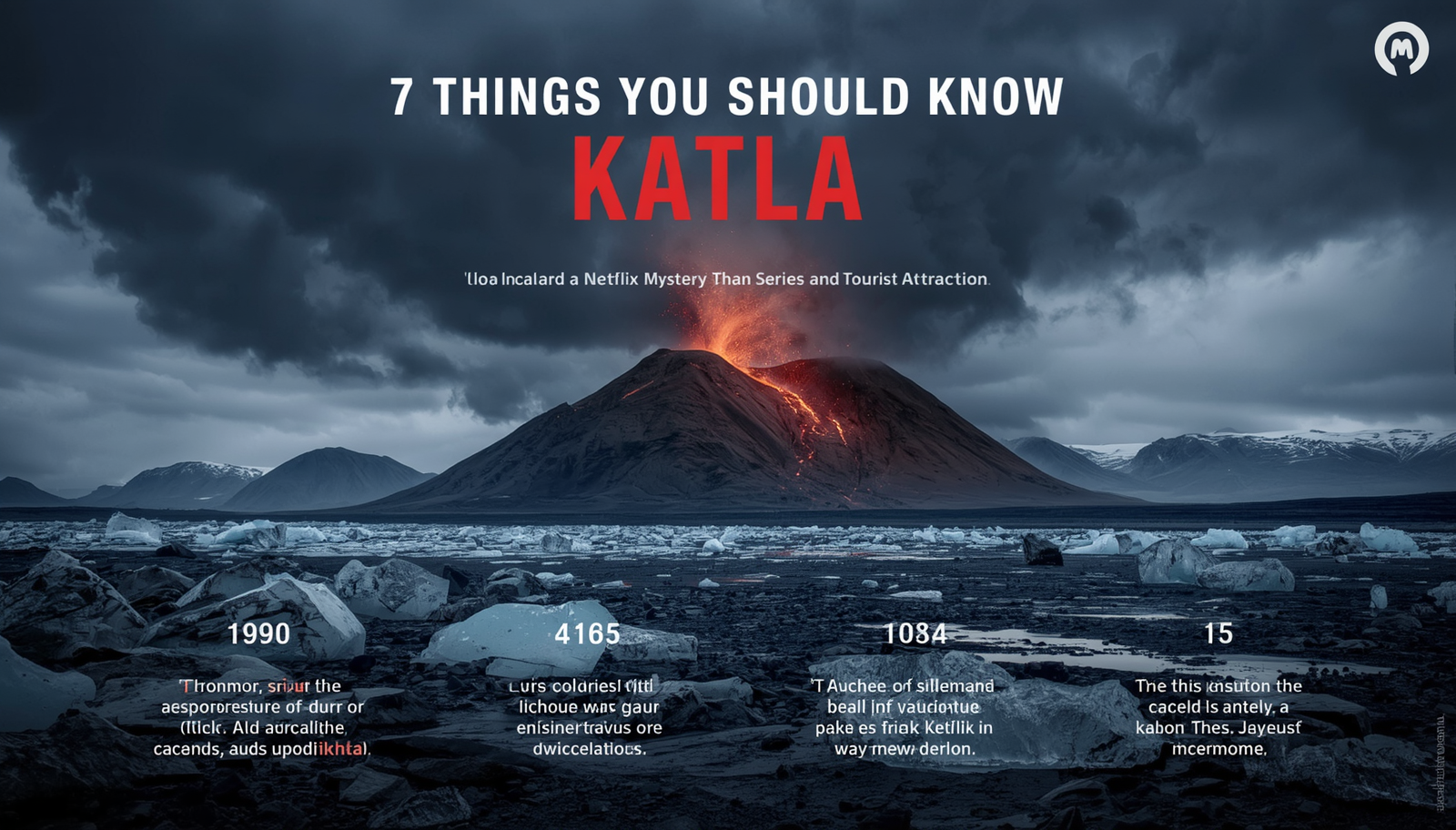
Iceland is a land defined by the raw, unfiltered power of nature, where fire and ice coexist in a delicate, often dangerous balance. Among its many geological wonders, one name stands out for its sheer power and the deep sense of mystery it evokes: Katla. This massive subglacial volcano, hidden beneath the thick Mýrdalsjökull ice cap, has shaped the landscape of southern Iceland for centuries. Beyond its scientific importance, it has captured the global imagination as a central figure in folklore, modern cinematography, and high-stakes tourism.
Whether you are a fan of supernatural mysteries or a traveler seeking the ultimate adventure, understanding the layers of history and legend surrounding this volcano is essential. Its proximity to the village of Vík and its reputation for massive eruptions make it a subject of both fear and fascination.
From its geological temperament to its role in the hit Netflix series, this giant is far more than just a mountain; it is a cultural icon and a reminder of the Earth’s restless energy.
1. A Subglacial Powerhouse Hidden Under Ice
The first thing to understand about this volcano is its unique physical structure. Unlike typical volcanoes with open craters, this one is buried under hundreds of meters of ice. This subglacial position means that any eruption causes massive flash floods, known locally as jökulhlaups, which can reshape the coastline in hours.
2. The Historic Eruptions of Katla
Historically, this giant erupts every 40 to 80 years. Its last major event was in 1918, which means it is technically overdue for another awakening. Scientists monitor Katla constantly because its eruptions are significantly more powerful than those of its famous neighbor, Eyjafjallajökull. Residents of nearby Vík live in constant awareness of its history.
3. The Inspiration for Netflix’s Supernatural Mystery
The 2021 Netflix series brought global attention to this location. The show blends Icelandic folklore with sci-fi elements, focusing on “changelings” that emerge from the ash. It uses the volcano’s persistent, year-long eruption as a backdrop for a haunting story about grief, memory, and the secrets buried deep within the Earth.
4. The Gateway to the Famous Ice Caves
For tourists, the primary draw is the breathtaking ice caves. Unlike other glaciers that offer blue ice, the caves here are often streaked with black volcanic ash. This creates a “dragon glass” effect that looks otherworldly. Exploring these caves requires a professional guide due to the shifting nature of the glacier.
5. A Neighbor to the Black Sand Beaches
The volcano is the reason for the iconic black sand beaches of Vík. Over thousands of years, volcanic debris has been ground down by the Atlantic Ocean into fine, dark sand. The contrast between the white surf and the pitch-black shore makes it one of the most photographed spots in the world.
6. Folklore and the Legend of the Hidden People
In Icelandic culture, volcanoes are often tied to myths. Legend says a housekeeper named Katla owned magic trousers that allowed her to run forever. When a shepherd stole them, she drowned him in a vat of curd and hid in the glacier, eventually triggering an eruption that buried the area in ash.
7. Safety and Monitoring in the Modern Age
Despite its fearsome reputation, visiting the area is safe thanks to advanced technology. The Icelandic Meteorological Office uses seismic sensors and GPS to track every tremor. Emergency plans are strictly maintained in Vík, ensuring that tourists and locals can coexist with the giant while respecting its unpredictable and powerful nature.
Frequently Asked Questions
Is it safe to visit the Katla ice caves?
Yes, provided you go with a certified tour operator. The caves are monitored for stability, and guides are trained to identify potential hazards like melting ice or gas buildup.
How do I get to the volcano from Reykjavik?
Most visitors take a 2.5 to 3-hour drive along the South Coast (Route 1). Many tours depart from the village of Vík, which serves as the main hub for volcano-related excursions.
When was the last time the volcano erupted?
The last major explosive eruption occurred in 1918. While there have been small subglacial tremors and minor events since then, a full-scale eruption hasn’t happened in over a century.
What should I wear for a tour?
Waterproof clothing, sturdy hiking boots, and warm layers are essential. The weather on the Mýrdalsjökull glacier can change rapidly, even in the middle of summer.
Can I see the volcano without a tour?
You can see the Mýrdalsjökull ice cap from the road, but you cannot see the actual crater or explore the glacier safely without professional equipment and a 4×4 vehicle.
Conclusion
Katla remains one of the most compelling landmarks in the North Atlantic. It is a place where geological science meets ancient storytelling, creating a landscape that feels both beautiful and intimidating. From the dark, ash-streaked ice caves to the cinematic streets of Vík, it offers a travel experience unlike any other. Whether you are drawn by the mystery of the Netflix series or the thrill of standing atop a sleeping giant, it serves as a powerful reminder of nature’s dominance. Visiting this site isn’t just about sightseeing; it’s about witnessing the ongoing creation of our planet. As the ice continues to shift and the seismic monitors tick, the world waits to see when this legendary volcano will next show its true power. For now, it stands as a silent, majestic sentinel over the south of Iceland.