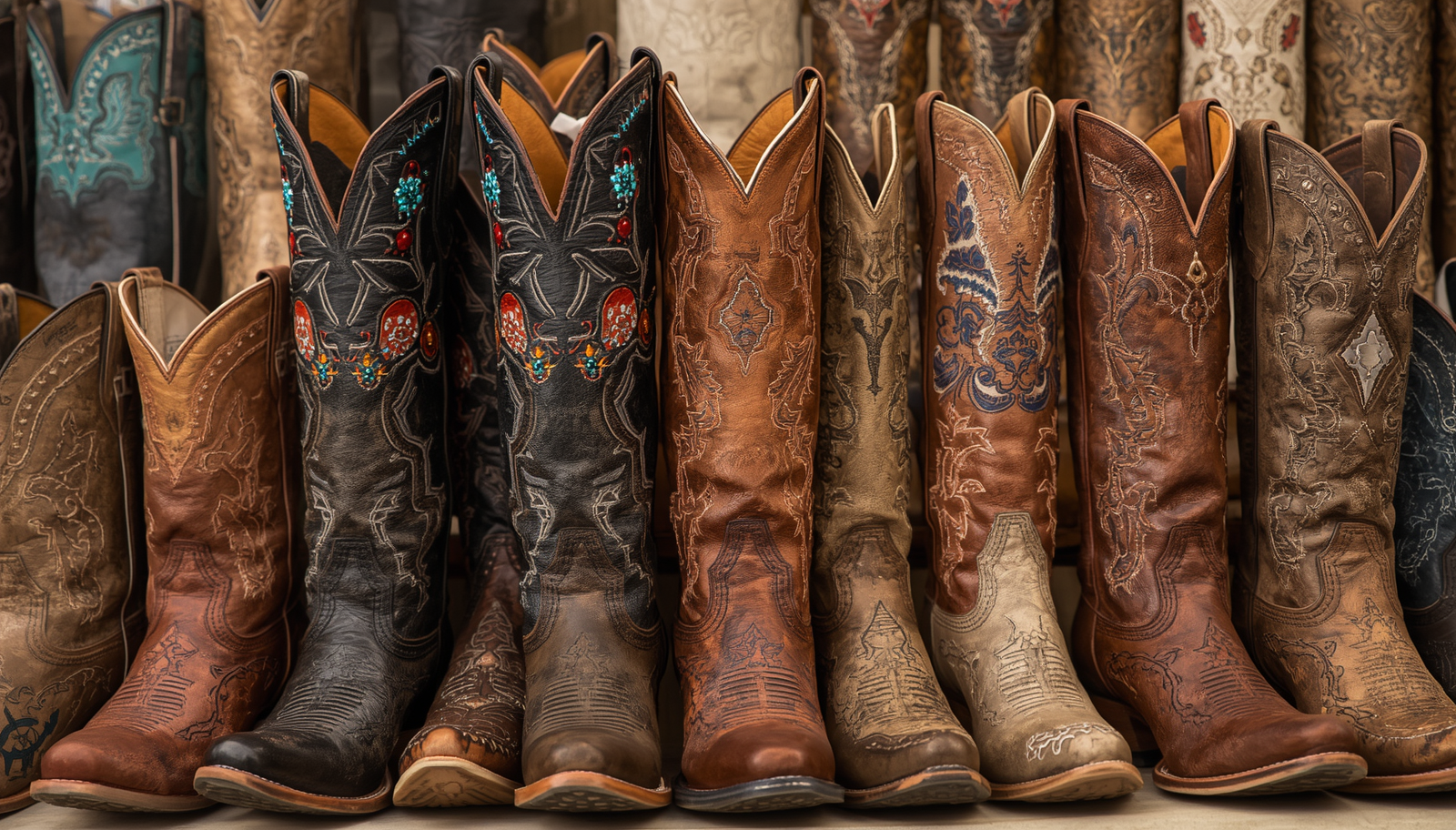
Classic cowgirl boots feature both short and tall shafts that extend up the leg for a traditional western silhouette. Their heels prevent the feet from sliding through the stirrups. This type of boot also comes in a variety of styles and colors. Here is what to know about the different types of cowgirl boots:
Toe Shape Variety
Cowgirl boots come in several toe shapes, including snip-toe, pointed, square, and round styles. Each model may use a different toe design. Snip-toe styles narrow toward the front with a slightly tapered tip. Pointed toes extend further and are often used in designs associated with more formal or styled outfits. Square toes are wider and have a flat front edge; they are often paired with modern or utility-focused boot constructions. Round toes follow a curved front shape and are commonly used in traditional Western boot designs. Toe shape affects the overall silhouette of the boot. It changes how narrow or wide the front appears, and it also influences how the boot pairs with different clothing styles.
Material Differences
Cowgirl boots are made using different materials, including various types of leather and, in some cases, exotic hides. Leather can vary in finish, color, and texture, and natural markings appear on the surface. Higher-grade leather is used for its durability and resistance to wear. It holds up under different environmental conditions, though performance depends on the specific treatment and construction of the boot.
Materials may change in appearance as they develop surface wear patterns. Leather boots are used in both functional and fashion contexts. They are designed for riding and general wear, and can be used in various settings depending on style and construction.
Construction Methods
Some cowgirl boots, including both classic and fashion-oriented designs, use specific welt construction practices. In such methods, manufacturers stitch the upper, insole, and outsole together through a welt. This structure allows the outsole to be replaced when it wears down, depending on how the boot is built and maintained.
This construction method supports the overall shape of the boot across the toe, arch, and instep. This arrangement also helps distribute pressure across the foot during movement and standing. The structure also contributes to stability by keeping the upper and sole connected. Many boots use leather outsoles on the bottom surface. Leather provides a firm base, and it also allows some flexibility during walking. The material changes over time as it reacts to moisture, heat, dirt, and repeated contact with the ground. These changes affect both texture and appearance.
Compared with synthetic materials, leather soles do not stay visually uniform over long periods of use. They show wear patterns that develop gradually with exposure. Users may walk on soil, gravel, pavement, or mixed terrain, depending on where they wear the boots. Some designs also include stacked leather heels. Manufacturers build these heels by layering sections of leather into a solid shape. This layered structure supports the heel area during repeated impact.
Finish Variations
Cowgirl boots can appear in a wide range of colors. Some designs use earth-toned shades such as brown, tan, or reddish-brown, while others use brighter colors like turquoise, pink, or green. These color choices vary by manufacturer and style line. Color selection changes the visual appearance of the boot. Darker tones tend to show less contrast with wear, while lighter or brighter tones make surface details more visible. Manufacturers also produce boots with different surface finishes. Patent leather has a glossy surface, and suede has a softer, matte texture. These finishes come from different treatment processes applied to the leather surface.
Purchase Quality Cowgirl Boots Today
Cowgirl boots come in both traditional and modern designs. Different silhouettes exist across a range of collections, and these variations reflect differences in shape, height, and overall construction. Invest in high-quality cowgirl boots today.