Seasonal weather patterns place different demands on roofing materials, and those changes can lead to repair needs over time. Roofs sustain damage that requires immediate attention when temperatures change, precipitation increases, or ice forms. Roof repair helps address seasonal wear before small issues spread further. Here are a few tips on how seasonal changes affect roof repair needs:
Winter Ice Damage Repair
Winter weather puts immediate stress on roofs, often creating sudden repair needs that demand urgent attention. Ice dams form above warmer areas, trapping meltwater that seeps beneath flashing and causes leaks from above. Drifting snow gathers on lower roof sections, adding weight and increasing the risk of water intrusion. Metal roofs and shingles respond differently to thawing and drainage after winter storms, each showing distinct patterns of stress and water flow.
Freeze-thaw cycles widen small openings around flashing, joints, and roof edges as trapped moisture expands and contracts. Roof repair needs during winter or immediately after storms focus on these vulnerable areas, where melting snow refreezes near eaves or around penetrations. On sloped roofs, this pattern affects shingles differently than metal panels, so repair needs vary by roofing material and drainage path.
Spring Drainage Repair
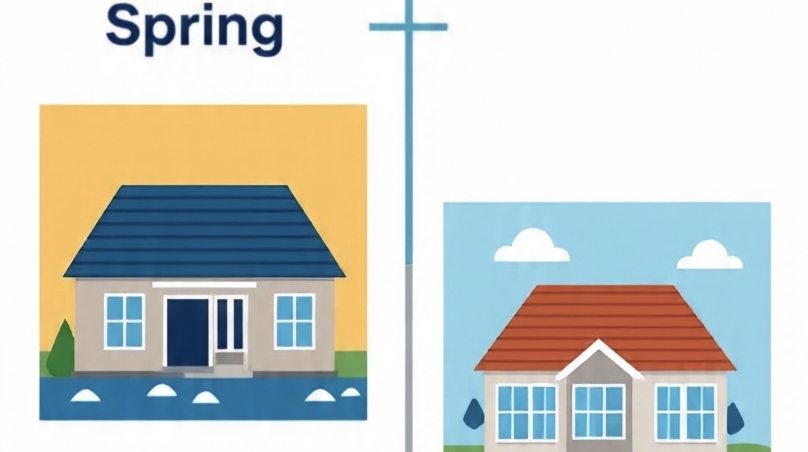
Residual freeze-thaw cycles sometimes open gaps in flashing, allowing runoff from melting snow to reach vulnerable roof areas. Spring weather often highlights repair needs as melting snow and steady rain test sections affected by winter conditions. During this season, cracked shingles, detached vents, loose seams, and worn flashing points often become noticeable. Extreme cold lifts and separates shingle tabs, leaving joint lines exposed to water during spring rains. Gutter maintenance may reveal roof issues around transitions, where ice dams and runoff combine to direct water back under edges rather than away from the home; this increases the potential for moisture intrusion and related damage. Professional repair experts are able to clean gutters and replace damaged roofing sections to make sure your roof is functioning properly.
Summer Exposure Repair
Midday heat often highlights seam weaknesses and material fatigue in low-slope commercial roofs. Repeated thermal expansion during hot afternoons pulls at fasteners, stresses seams, and challenges surface coatings in transition zones. Sun-reflective coatings require a stable, intact surface, so repair work usually precedes full membrane restoration.
Extended summer heat can accelerate surface wear on low-slope roofing materials. Flashing edges and roof penetrations, such as vents or rooftop units, experience repeated expansion and contraction. During summer inspections, repair teams identify separation, coating wear, and loosened attachments before issues spread across larger sections. Skilled roofing experts address these problems efficiently, helping preserve roof integrity and extend its service life.
Fall Moisture Repair
Leaves accumulating in the fall can block drainage and cause water to spill back at roof edges, exposing trim and fascia during heavy storms. Autumn storms often reveal cracks or washed-out sealant around trim, while cold rain highlights entry points along valleys, eaves, and skylight curbs. Sudden cold snaps may make small leaks or wall transition points more noticeable, allowing water to bypass barriers. Exposed flashing, trim, and interior wall areas indicate where repairs are needed before winter arrives. Experienced roofing professionals are able to address these vulnerabilities, helping protect the roof and home through the colder months.
Discover Professional Roof Repair Services
Protect your roof from seasonal wear with professional repair and maintenance services. Experienced roofing contractors understand the unique needs of both residential and commercial buildings. They handle everything from repairing worn areas to replacing leaky shingles. Rain and snow can lead to clogged gutters, which regular cleaning and inspections help prevent. Routine inspections also allow contractors to spot issues with siding and other vulnerable areas. Reach out to a roofing expert today to keep your home or business safe year-round.