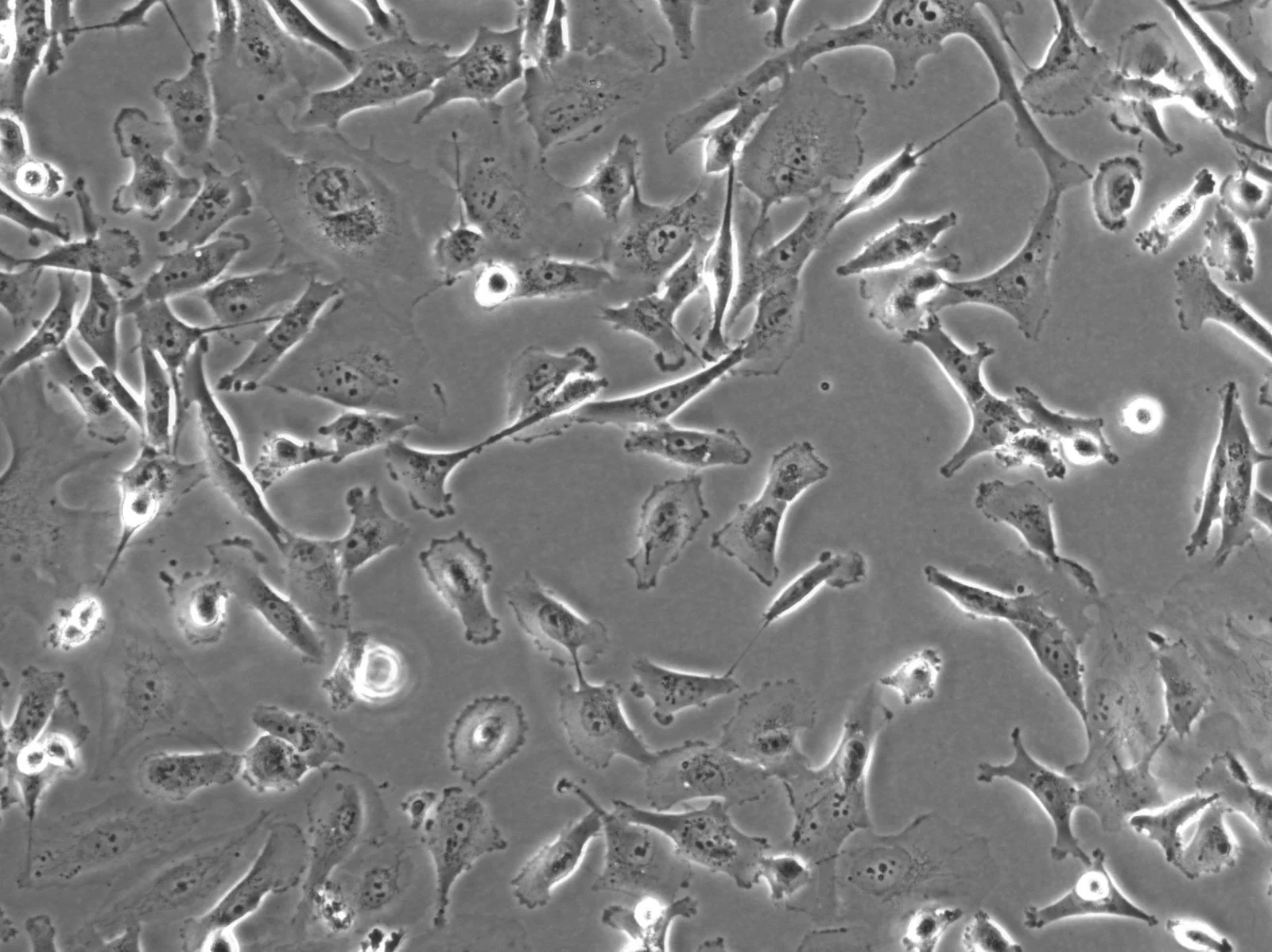
Triple-negative breast cancer is, by any measure, one of oncology’s most stubborn problems. It accounts for roughly 15–20% of all breast cancer diagnoses worldwide, yet its defining feature — the absence of oestrogen receptor, progesterone receptor, and HER2 expression — means the targeted therapies that have transformed outcomes for other subtypes simply do not apply. Patients face higher recurrence rates, earlier metastasis, and poorer survival than those with other breast cancer subtypes. Closing that gap depends heavily on reliable preclinical models. One cell line, established more than five decades ago, continues to sit at the centre of that effort.
The Origins of a Workhorse Cell Line
The MDA-MB-231 line was derived from a pleural effusion of a 51-year-old patient with metastatic breast adenocarcinoma. That origin matters. Unlike cell lines drawn from primary tumours, MDA-MB-231 already carried the molecular fingerprint of aggressive, spread disease when it was first cultured. It is ER-negative, PR-negative, and HER2-negative — the triple-negative phenotype researchers need — and it expresses mutated p53, a feature common in clinical TNBC cases. In microarray profiling, its genome clusters with the basal subtype of breast cancer, the most clinically aggressive molecular grouping within TNBC.
That biological fidelity is not a happy accident. It is the reason laboratory teams keep returning to the same line rather than switching to newer alternatives.
What Makes It Genuinely Useful in the Lab
Reproducibility is the first thing any preclinical researcher needs from a cell model, and MDA-MB-231 delivers it consistently. The cells grow robustly in standard culture conditions, tolerate a wide range of experimental manipulations, and behave predictably across independent laboratories — a non-trivial quality in a field where irreproducibility has become a serious concern.
Beyond practicality, the line has authentic invasive properties. MDA-MB-231 cells are highly invasive in vitro, and when implanted orthotopically in mouse mammary fat pads they produce xenografts that spontaneously metastasise to lymph nodes and lungs. That spontaneous metastatic behaviour allows researchers to study the full cascade of tumour progression — invasion, intravasation, colonisation of distant sites — in a single, well-characterised model. Specialist clones derived from the parental line have been selected for preferential homing to bone (MDA-231BO) and brain (MDA-231BR), giving investigators organ-specific metastasis models without abandoning the broader experimental context they already know.
For laboratories sourcing cells for these kinds of studies, MDA-MB-231 remains the reference point against which newer models are benchmarked.
A Platform for Drug Discovery and Resistance Research
The therapeutic challenge in TNBC is stark. Chemotherapy remains the backbone of systemic treatment, and resistance to those agents is both common and clinically devastating. MDA-MB-231 has been used extensively to model that resistance. Doxorubicin-resistant sublines, for example, have demonstrated up to a tenfold increase in IC50 relative to parental wild-type cells, providing a tractable in vitro system for identifying and testing agents that could restore chemosensitivity.
Immunotherapy and antibody-drug conjugates have recently opened new avenues in TNBC management, and MDA-MB-231 is being used to interrogate those pathways too. Studies examining PD-L1 expression, PARP inhibition, WNT/ROR2 signalling, and epithelial-mesenchymal transition have all used this line as a primary or comparative model. The breadth of published data — spanning decades and thousands of peer-reviewed papers — means new results can be contextualised against a deep background of prior findings, something that simply is not possible with recently developed lines.
Strengths, Limitations, and What Researchers Should Keep in Mind
No single model captures the full complexity of human cancer, and MDA-MB-231 is no exception. A few things are worth keeping front of mind:
- The line represents one molecular subtype within TNBC, broadly the mesenchymal stem-like category, so findings do not automatically translate to luminal androgen receptor or immunomodulatory subtypes.
- Long-term passaging in any laboratory introduces the risk of phenotypic drift; researchers should verify receptor status and key mutation profiles periodically.
- Xenograft results in immunocompromised mice cannot replicate the immune microenvironment that shapes real tumour behaviour — a meaningful caveat as immuno-oncology becomes more central to TNBC therapy.
These are not reasons to abandon the model. They are reasons to use it thoughtfully, pairing it with complementary lines or patient-derived organoids where the science demands it.
Why It Still Sets the Standard
The projected global breast cancer burden is expected to exceed three million new cases annually by 2040, and TNBC will represent a disproportionate share of the most difficult-to-treat diagnoses within that figure. The urgency of finding better systemic therapies has never been greater. In that context, the value of a model with half a century of validated, cross-referenced, internationally reproduced data is difficult to overstate.
MDA-MB-231 endures not through institutional inertia but because it consistently does what a preclinical model is supposed to do: it reflects clinically relevant biology, it behaves reliably, and it sits within a body of literature large enough to give new findings genuine meaning. For researchers working on invasion, metastasis, chemoresistance, or novel therapeutic targets in triple-negative breast cancer, the practical starting point remains the same as it has been for decades — and the science continues to justify that choice.