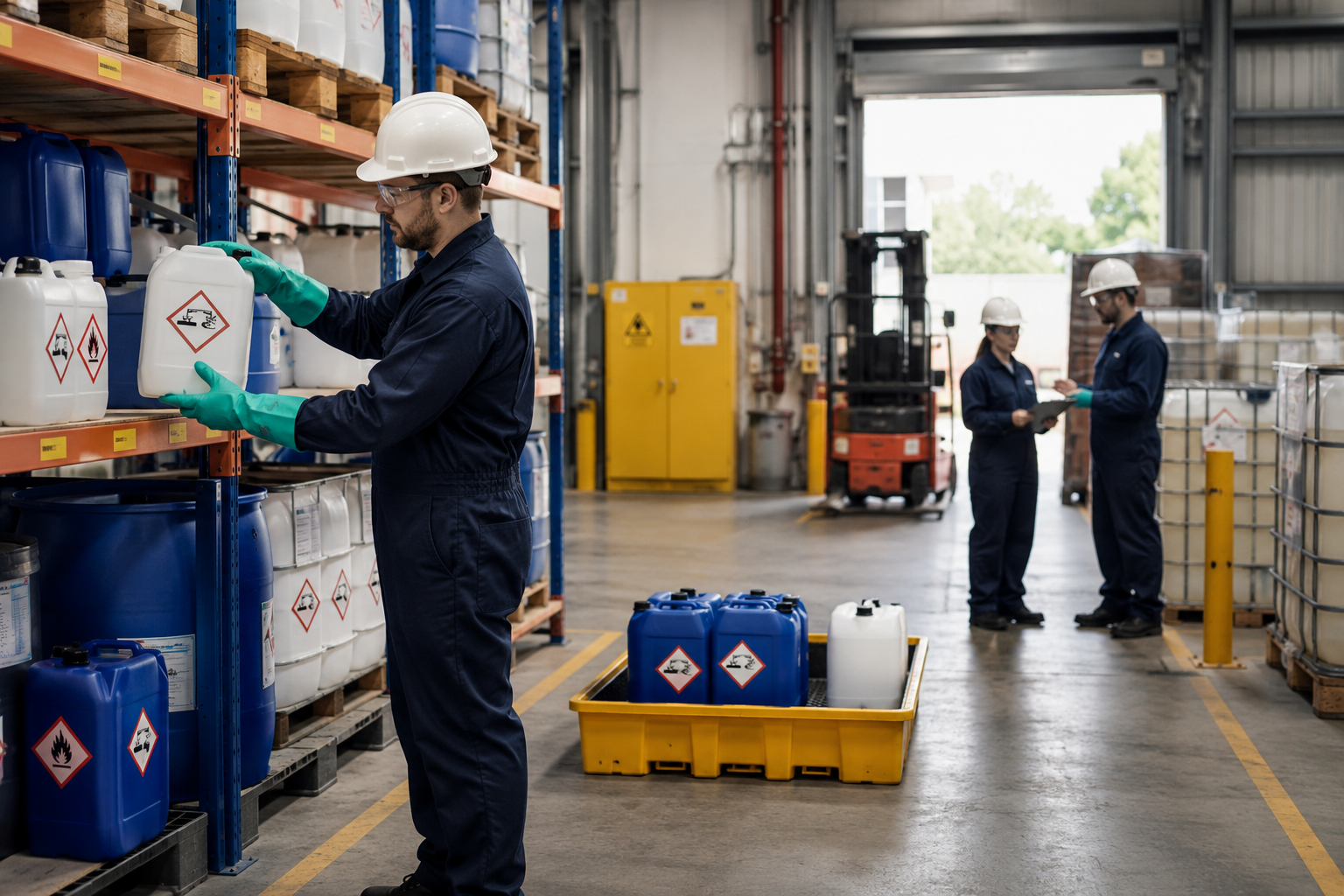
Effective warehousing of hazardous materials requires far more than just being extra careful. It requires implementation of safety measures, compliance with legal requirements, and taking care of the environment. The amount of hazardous materials stored in commercial warehouses in Australia is really huge. Any mistake in the process of storing hazardous materials might lead to fatal injuries of the personnel and neighbourhood people and even to ecological catastrophe.
Of course, it is vital for business owners and managers. Not only is the danger of hazardous materials significant but the incorrect transportation and warehousing may also have serious consequences. You may face both financial losses and deterioration in the reputation of your company. The clients and potential partners of your company will certainly value your attention to the issues of safety.
The following recommendations are going to show what you need to know about managing hazardous goods at your warehouse. You are going to learn about correct storage and disposal procedures, safe management of hazardous materials, as well as necessary safety equipment for your employees.
Legislation Regarding Management of Hazardous Materials
Firstly, it is obligatory for companies operating in Australia to adhere to all health and safety legislation developed in this country. To avoid any legal problems when managing hazardous materials during international shipments, it is recommended that you study the legislation enforced by agencies like the Occupational Safety and Health Administration, the Environmental Protection Agency, and the Department of Transportation. All these organisations have very strict safety requirements that serve as standards in the field all over the world.
In this way, the implementation of the international standards in your warehouse will allow you to guarantee additional safety of your personnel. The multinational corporation that works together with your company might expect from you higher requirements regarding management of hazardous materials. Besides, this information is very useful in order not to have misunderstanding with foreign businesses about legislative requirements.
Safe Storage of Hazardous Goods
Foremost, the safe storage of hazardous goods is essential for avoiding tragedies in your facility. The mixing of incompatible materials on one shelf may be really risky and even lethal for the personnel of your facility. For example, the mixing of specific chemicals may cause an explosion, fire or release of poisonous gases.
Consequently, the segregation procedure implies the thorough classification of hazardous materials, as well as their safe storage. In this situation, you should use special storage cabinets, secondary containment pallets, and ventilation in storage areas. Besides, because of the excessive heat that can occur during summer months in Australia, you should store volatile hazardous materials in the climate-controlled storage areas. For additional information, refer to Safety Data Sheets for each type of goods delivered to your warehouse.
Safe Handling Procedures and Required Safety Equipment
It is evident that the work with hazardous goods puts your personnel under high risks. For this reason, it is important that you inform your personnel about safe transportation of hazardous materials. Sometimes the haste in this case results in accidents and expensive spills of materials. Besides, the inappropriate personal protective equipment may threaten health of your workers.
Therefore, you should provide your personnel with safety gear including chemical-resistant gloves, respirators, full-face shields, and aprons. Also, your warehouse should have eye washing and emergency showers, as well as first-aid kits designed specially for dealing with accidents involving hazardous goods. Frequent drills will allow you to guarantee that your workers can use all this equipment properly, including things like spill kits.
Proper Disposal of Hazardous Wastes
Just as the handling and storing of hazardous materials, the correct disposal of hazardous waste is equally important. The flushing of chemicals into sinks and dumping them into regular trash bins is unacceptable and illegal practice. This activity may be extremely dangerous to natural environment because of soil and water contamination.
For this reason, your warehouse should have special place designed for accumulating dangerous materials. Collaboration with certified waste management contractors will allow you to get rid of hazardous waste. They are able to dispose of the materials and also issue you all the necessary documents proving that you complied with existing regulations.
Creating Safety Culture
In conclusion, it is necessary to say that you should do several things in order to manage hazardous materials effectively. You should revise your existing practices and take additional measures for enhancing the safety of your warehouse.