
If you’re in international trade, market research, or B2B sales, you already know the value of good data.
But here’s the challenge:
Most trade data platforms are either expensive, too high-level, or locked behind paid subscriptions.
The good news? There are still several free or partially free trade data platforms that can give you real insights into markets, competitors, and even individual buyers.
Below is a curated list of the most useful free trade data platforms by region—plus what each one is actually good for.
Ⅰ.Global Trade Data Platforms
Tendata – Global Trade Data Platform
Website: https://www.tendata.com
(1)What it offers:
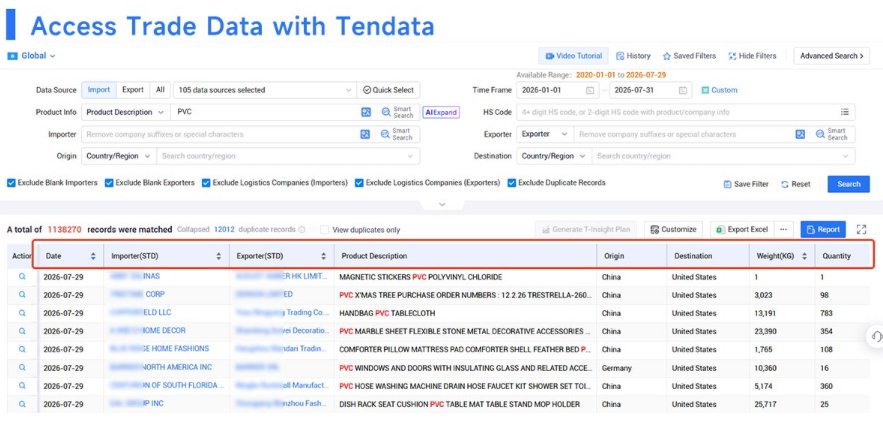
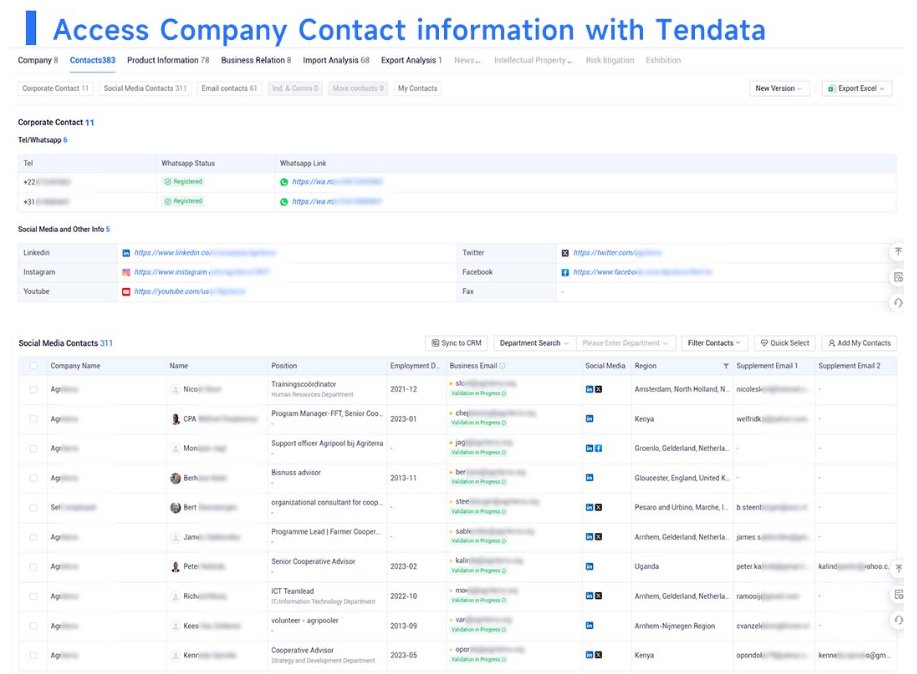
Tendata provides access to global trade data from 228+ countries and regions. Unlike many macro-level platforms, it includes company-level details such as:
·Importer and exporter names
·Product descriptions and HS codes
·Quantities, weights, and prices
·Contact information for direct outreach
(2)Best for:
·Identifying real buyers with verified import history
·Market and competitor research
·Customer due diligence and background checks
While some features require a subscription, Tendata is one of the few platforms that combines global coverage with actionable, company-level data.
Ⅱ.Americas
1. ImportYeti (USA)
Website: http://www.importyeti.com
(1)What it offers:
A North America-focused trade data platform that allows searches by:
·Company or supplier name
·HS code or product
·Shipment records and relationship maps
(2)Best for:
·Market research on U.S. importers
·Understanding supplier-buyer relationships
·Basic customer background checks
(3)Limitations:
Only covers U.S. import data, and some features are not fully free.
2. USITC DataWeb (USA)
Website: https://dataweb.usitc.gov/
(1)What it offers:
The official U.S. International Trade Commission data portal, synchronized with customs records. You can search by:
·HTS code
·Trade partner
·Transportation mode
·Quantity and value details
(2)Best for:
·Detailed U.S. trade statistics
·Generating reports for market analysis
·Tracking import/export trends by product and country
3. Comex Stat (Brazil)
Website: http://comexstat.mdic.gov.br/
(1)What it offers:
Brazil’s official foreign trade database, managed by the Ministry of Industry and Trade. Includes:
·Import/export company directories
·Detailed transaction data
(2)Best for:
·Understanding the Brazilian market
·Verifying Brazilian trading partners
·Analyzing import/export flows by sector
4. Trade Data (Canada)
Website: https://www.canada.ca/en/services/business/trade/trade-statistics.html
(1)What it offers:
Official trade statistics from Statistics Canada, including:
·Detailed import/export data
·Product-level breakdowns
·Regular updates
(2)Best for:
·Canadian market analysis
·Cross-border trade research (U.S.–Canada)
·Validating trade flows by product and region
Ⅲ.Europe
1. Eurostat (European Union)
Website: https://ec.europa.eu/eurostat/web/international-trade/data
(1)What it offers:
The EU’s official statistics office, providing trade data for:
·All 27 EU member states
·European Economic Area (EEA) countries
Data includes trade flows by product, partner country, and time period, with high integration across EU datasets.
(2)Best for:
·Pan-European market analysis
·Tracking intra-EU and extra-EU trade
·Policy and academic research
2. French Customs – RITA (France)
Website: http://www.douane.gouv.fr/
(1)What it offers:
France’s official customs portal, offering partial access to:
·Import/export trade data
·Official tariff and regulatory information
(2)Best for:
·Verifying French trade partners
·Understanding French import/export regulations
(3)Limitations:
Most content is in French, which can be a barrier for non-French speakers.
3. UK Trade Info (United Kingdom)
Website: https://www.uktradeinfo.com/
(1)What it offers:
The UK’s official trade statistics platform, including post-Brexit data on:
·Imports and exports by product
·Trade partner countries
·Detailed commodity information
(2)Best for:
·UK-specific market research
·Tracking post-Brexit trade patterns
·Validating UK-based importers and suppliers
Ⅳ.Asia
1. China Customs Statistics (China)
Website: http://stats.customs.gov.cn/
(1)What it offers:
The official trade data portal of China’s General Administration of Customs. You can search by:
·Time range
·Country/region
·HS code or product
In addition to trade statistics, you can also check:
·Tariff rates
·Customs clearance regulations
·Trade policy updates
(2)Best for:
·Understanding China’s import/export flows
·Validating Chinese suppliers or buyers
·Monitoring competitive activity in key product categories
This is a must-save resource for anyone working with China-based trade.
2. Singapore Customs (Singapore)
Website: https://www.customs.gov.sg/
(1)What it offers:
Singapore’s official customs platform, including:
·Import/export commodity flows
·Tariff rates
·Trade method statistics
·Trade policy updates
(2)Best for:
·Southeast Asia market analysis
·Verifying Singapore-based trading partners
·Tracking regional trade flows
3. Korea Customs Service (South Korea)
Website: https://www.customs.go.kr/english/main.do
(1)What it offers:
South Korea’s official customs portal, with data on:
·Import/export commodity flows
·Tariff rates
·Trade statistics by product and country
(2)Best for:
·Northeast Asia market research
·Validating Korean importers and suppliers
·Tracking trade trends in key industrial sectors
How to Use These Platforms Effectively
No single platform will give you everything you need.
A practical approach is to combine:
·Global or regional platforms (e.g., Tendata, Eurostat) for broad market insights and buyer discovery
·National customs portals (e.g., USITC, China Customs) for deep, country-specific validation
For example:
·Use a global platform to identify potential buyers by product and country
·Cross-check with national data to confirm import volumes and trends
·Use official customs sites to verify compliance, tariffs, and regulations
This layered approach helps you move from “interesting market” to “verified, actionable lead.”
Conclusion
Free trade data doesn’t mean low-quality data.
With the right mix of platforms, you can:
·Map global and regional trade flows
·Identify real buyers and suppliers
·Validate markets before investing time or money
The biggest mistake most exporters make is not a lack of data—but a lack of strategy.