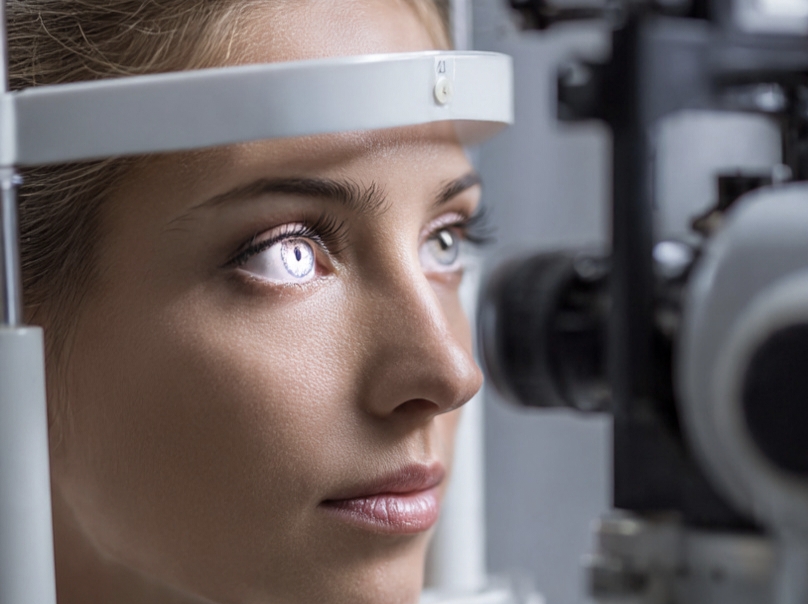
Eye exams monitor changes in vision and eye health over time; doctors use these visits to check for signs of disease. Some eye conditions develop without early symptoms. Although vision changes are not always noticeable at first and LASIK evaluations also require detailed eye exams, comprehensive eye exams help detect problems earlier; doctors may identify signs associated with other health conditions during these evaluations.
Monitoring Vision
Many vision changes develop gradually; comprehensive eye exams help identify refractive errors and eye diseases. Doctors test visual acuity during these appointments. When a doctor performs a dilated eye exam and evaluates the eye’s internal structures, the exam may also reveal signs of conditions such as high blood pressure or diabetes; the doctor may recommend additional follow-up care.
Children also receive vision evaluations. Some eye conditions begin during childhood; amblyopia is one of the leading causes of vision loss in children. Because pediatric vision changes may develop early and follow-up care may be recommended after evaluation, eye doctors and pediatricians include vision checks as part of ongoing care; treatment may begin after further examination.
Reviewing Lasik
Lasik reshapes the cornea to treat refractive errors such as myopia, hyperopia, and astigmatism, thereby changing how light focuses on the retina. The procedure uses laser technology. Although Lasik is completed in a short period and doctors perform candidacy evaluations before surgery, eye exams remain part of the treatment process; follow-up visits are scheduled afterward.
Corrective lenses are not always eliminated after Lasik. Results vary by prescription and eye health, and some individuals continue to use glasses or contact lenses after surgery. When doctors review refractive errors during Lasik evaluations, patients complete comprehensive eye exams before treatment. Doctors also assess overall eye health and the stability of the prescription. During evaluations, doctors review refractive errors, and additional testing may be required.
Lasik candidacy reviews include medical history. Doctors evaluate the prescription range, and they also review eye conditions that may affect eligibility. If a person has cataracts, keratoconus, autoimmune disease, or another eye disease, the doctor may determine that LASIK is not appropriate, and additional evaluation may be recommended.
Evaluating Eligibility
Age requirements are part of the candidacy review, and Lasik candidates must be at least 18 years old. Pregnancy or nursing may affect eligibility for surgery. Because postoperative instructions are part of recovery care and follow-up appointments occur after treatment, doctors also review whether a candidate can complete those requirements, and additional appointments may be scheduled.
Lasik does not require stitches or bandages, and the procedure is used to correct certain refractive errors. Recovery periods vary. Although some individuals report reduced dependence on glasses or contact lenses after surgery and doctors continue monitoring eye health during follow-up visits, additional eye exams remain part of postoperative care, and visual changes may continue to be evaluated.
Eye exams continue after surgical correction. Doctors monitor healing during follow-up appointments, and they also review vision changes after treatment. When postoperative visits occur according to the treatment plan, doctors continue evaluating visual changes over time; follow-up care remains part of ongoing eye health monitoring, and additional exams may be scheduled if needed.
Find a Clinic
Routine eye care supports long-term monitoring, and comprehensive eye exams help doctors monitor changes over time. Glaucoma, cataracts, diabetic retinopathy, and age-related macular degeneration may develop with few early symptoms. Because eye health changes across different life stages and some conditions progress gradually, regular evaluations remain part of ongoing vision care, and doctors use these appointments to review eye health before and after procedures. Find a clinic in your area to learn more.