
Stand near Jebel Ali port on any weekday and you can watch one of Dubai’s least advertised industries at work: row after row of used cars, wrapped, manifested, and waiting for ships bound for Mombasa, Karachi, Tbilisi, and a hundred ports beyond. The emirate has quietly become one of the planet’s great used car clearing houses, and the logic is easy to follow. The local market cycles vehicles young, the desert climate spares them rust, GCC specifications suit hot-country buyers perfectly, and the port infrastructure that moves everything else through Dubai moves cars just as fluently. For traders and individual buyers abroad, the arithmetic often beats their home market by a wide margin even after shipping.
Getting a share of that arithmetic means learning a process, because export buying is ordinary used car buying with three extra chapters attached: sourcing for a destination rather than a driveway, deregistering the vehicle correctly, and shipping it without surprises. Buyers looking to buy used car in Dubai for export can source directly through the marketplace listings, where export-ready dealers sit alongside the general used stock with real photos, stated prices, and direct WhatsApp contact, and many sellers in this lane handle the paperwork daily and will walk a first-timer through it. This guide covers the whole journey in order, so nothing at the port comes as a surprise.
Sourcing for a Destination, Not a Driveway
Export buying inverts one habit immediately: the destination country’s rules choose the car before your taste does. Most importing nations enforce some combination of maximum vehicle age, left or right-hand drive requirements, emissions standards, and steering-conversion bans, and a car that fails any of them is a very cheap way to lose money. Confirm your destination’s age ceiling and drive-side rule first, then shop entirely inside those lines, and if you are buying on behalf of a client abroad, get those rules in writing from them before a single viewing.
Within the lines, Dubai’s stock rewards the classic export instincts. The models that dominate the trade earned their place through parts availability and reputation in destination markets, Toyota above all, with the Land Cruiser, Prado, Corolla, and the pickup segment leading demand across Africa and Central Asia, followed by the dependable Nissan and Mitsubishi staples. Condition matters differently here too: mechanical health and a clean chassis outrank cosmetic polish, since a scuffed bumper survives a sea crossing better than a tired gearbox survives its first year abroad. The verification discipline stays exactly the same as any local purchase, service history first, an independent inspection for any finalist, confirmation that no bank loan or unpaid fines encumber the car, because a vehicle that cannot clear its paperwork cannot leave the country either.
Price with the full landed cost in mind from the start. The purchase figure is only the opening line of a sum that includes the export certificate and deregistration fees, transport to port, shipping itself, marine insurance if taken, and the destination’s own duties and taxes, which in many importing countries exceed everything else combined. One genuine sweetener helps the total: cars leaving the UAE for export sit outside the normal VAT treatment of local sales, and export-focused dealers price with that in mind, which is part of why the trade works at all.
Deregistration, Documents, and the Paper Trail
The administrative chapter runs in a fixed order, and running it correctly is the entire difference between a smooth export and a car stuck in a yard. Ownership transfers to you first through the standard process, with insurance for the interim period as required. The vehicle then deregisters through the licensing authority, surrendering its local plates in exchange for an export certificate, with temporary export plates issued where the car needs to move on its own wheels to the port. From that point the car exists on paper as cargo rather than transport.
The document set that travels with it is short and absolute: the vehicle’s registration card, known locally as the Mulkiya, the export certificate from the licensing authority, the customs clearance paperwork raised at the port, a commercial invoice stating the sale value, and ultimately the Bill of Lading from the shipping line, which is the document your buyer or agent abroad will need to claim the car. Requirements vary slightly by destination, and this is exactly where the export-ready dealers earn their role, since they raise these documents weekly and will either handle the chain for a fee or point you to the clearing agents who do. First-time exporters should take that help without embarrassment; the fee is small against the cost of a manifest error.
Shipping itself is a two-option decision. Roll-on-roll-off is the economical default, the car driving onto a vessel and off at the other end, suited to running vehicles and patient schedules. Container shipping costs more, protects more, and allows consolidation, one or more cars boxed together with parts in the gaps, which is how the professional traders squeeze the freight economics. Rates move with routes and seasons, so quote two or three forwarders, confirm what marine insurance is included, and build the destination port’s handling charges into the sum before committing.
The Model That Explains the Whole Trade
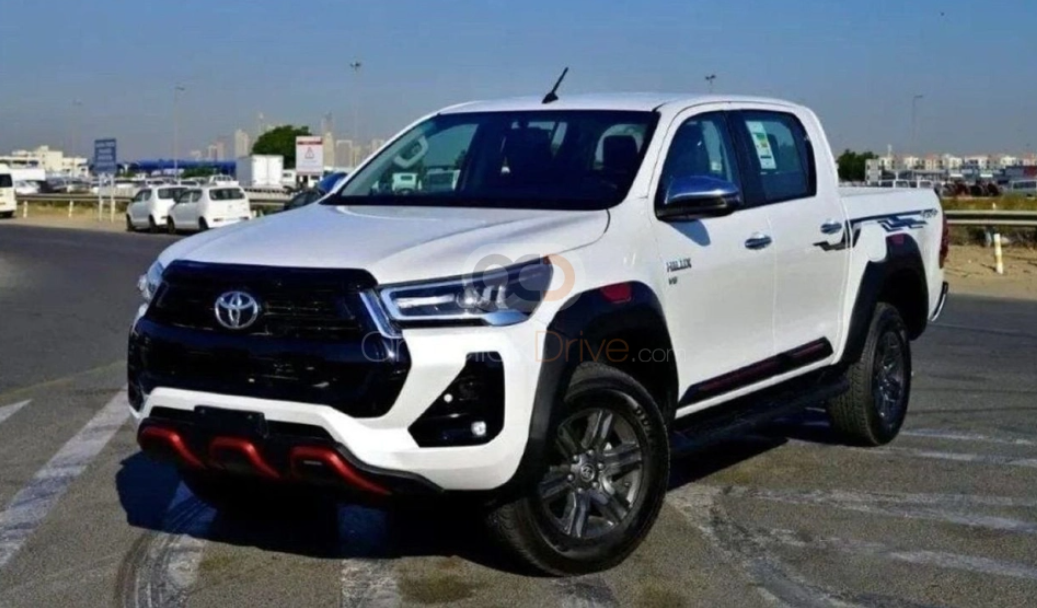
If one vehicle tells the story of Dubai’s export economy, it is the pickup that half the developing world runs on, and the demand pipeline to export Toyota Hilux from Dubai shows every principle of this guide working at once. Destination markets prize the Hilux for indestructibility and parts saturation, GCC-spec examples suit hot climates natively, Dubai’s fleets and businesses release well-maintained units into the used market constantly, and the price gap between a Dubai forecourt and an African or Central Asian showroom comfortably absorbs shipping and duties on the right example. The buying rules sharpen accordingly: diesel versus petrol follows the destination’s fuel and rules, single-cab workhorses and double-cab family trucks serve different buyers, age ceilings decide the model years worth viewing, and mechanical inspection matters doubly on a vehicle whose next decade will be harder than its last. Source it through the export-ready dealers, run the deregistration chain exactly as above, and the Hilux does what it has done for fifty years, which is hold its value across any ocean you ship it over.
The closing calibration is the honest one. Export buying rewards preparation and punishes improvisation, and the buyers who profit are the ones who confirmed the destination rules before shopping, priced the landed cost before negotiating, and let the paperwork professionals do the paperwork. Handled that way, the process is genuinely routine, Dubai has built an entire industry to make it so, and the reward is real: access to one of the world’s youngest, cleanest used car pools at source prices, with a port that ships anywhere waiting twenty minutes down Sheikh Zayed Road.
Run the sequence as written, rules first, sourcing second, inspection always, documents in order, and freight quoted twice, and the day comes around faster than expected: your car, wrapped and manifested in a row at Jebel Ali, a Bill of Lading in your inbox, and a buyer at a far port already counting the days. That is the trade, and it is open to anyone who does the homework.