
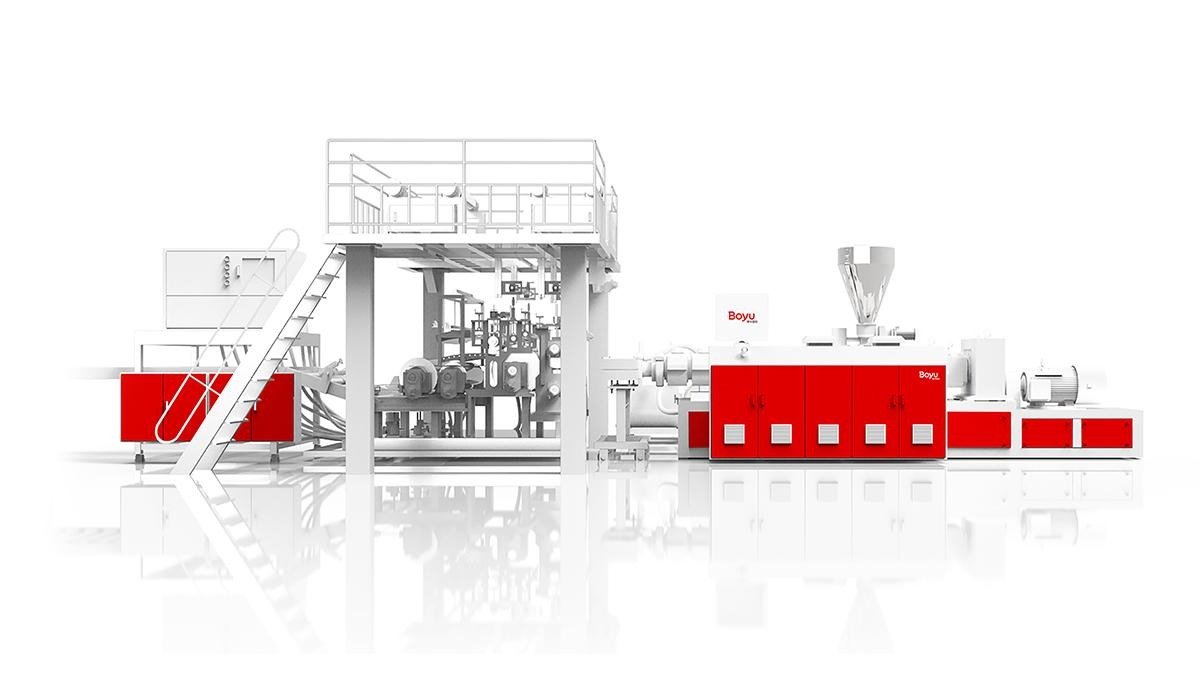
As residential and commercial spaces continue to demand higher durability, waterproof performance, and stability, SPC flooring has become one of the most widely used flooring types in today’s market. Its waterproof, moisture-resistant, and easy-maintenance properties make it suitable for both household and high-traffic commercial applications.
This article explores the performance requirements of SPC flooring in different applications and the key considerations for selecting the right SPC flooring production line.
随着住宅与商业空间对地板耐用性、防水性及稳定性要求的不断提高,SPC地板逐渐成为当前市场中应用广泛的地板类型之一。其良好的防水、防潮及易维护性能,使其同时适用于家庭与高流量商业场景。
本文将介绍不同应用场景下SPC地板的性能需求,以及SPC地板生产线的选型重点。
Why SPC Flooring Suits Both Residential and Commercial Use
为何SPC地板同时适用于住宅与商业场景
Due to its high-density rigid structure and stable performance, SPC flooring can maintain consistent physical properties across different environments, making it a reliable choice for both residential and commercial spaces.
In residential applications, SPC waterproof flooring offers moisture-resistant and easy-maintenance advantages, making it well-suited for kitchens, living rooms, and bathrooms. Homeowners benefit from a floor that resists spills and humidity without requiring specialized upkeep.
In commercial applications, the high wear resistance and compressive strength of SPC vinyl flooring can meet the demands of high-traffic environments such as shopping malls, office buildings, and hotels—where flooring is subjected to constant foot traffic, rolling loads, and frequent cleaning cycles.
凭借高密度刚性结构与稳定的性能表现,SPC地板能够在不同使用环境中保持一致的物理特性,是住宅与商业空间的可靠之选。
在住宅应用中,SPC防水地板具备防潮、易维护等优势,尤其适合厨房、客厅及浴室等区域。业主无需专业养护,即可抵御日常水渍与潮湿环境。
在商业应用中,SPC乙烯基地板凭借高耐磨性与抗压强度,能够满足商场、写字楼及酒店等高流量场所的持续踩踏、重物滚压与高频清洁需求。
Residential vs Commercial SPC Flooring: Different Performance Requirements
住宅与商业SPC地板:不同场景的性能要求
While SPC flooring performs well in both residential and commercial applications, the difference is not simply that commercial flooring needs to be “stronger.” Residential and commercial spaces place different types of stress on the floor, which means manufacturers must pay attention not only to product specifications, but also to the production processes behind those specifications.
SPC地板虽可同时应用于住宅与商业场景,但两者的差异并不只是“商业级产品更耐用”这么简单。住宅与商业空间对地板施加的使用压力并不相同,因此制造商不仅需要关注产品规格本身,也需要关注支撑这些规格的生产工艺控制能力。
Residential SPC Flooring
住宅级SPC地板
Residential SPC flooring is usually judged by comfort, appearance, acoustic performance, and everyday moisture resistance. These requirements are closely related to lamination quality, surface processing accuracy, board flatness, and backing stability.
住宅级SPC地板通常更强调脚感舒适度、外观质感、声学表现与日常防潮性能。这些性能要求与复合质量、表面处理精度、板材平整度及底垫稳定性密切相关。
Residential environments prioritize:
- Comfort and acoustic performance: IXPE, EVA, or other backing materials can improve underfoot comfort and sound absorption. To achieve this consistently, the backing layer must be evenly laminated to the SPC core, with stable pressure and temperature control during production. Poor backing lamination may lead to curling, edge lifting, or reduced board flatness after installation.
- Surface realism and design consistency: Residential buyers are highly sensitive to wood grain clarity, stone texture, gloss level, and embossing accuracy. For products using Embossed-in-Register surfaces, the decorative film and embossing pattern must remain accurately aligned. This places higher demands on film feeding, lamination stability, embossing control, and surface processing precision.
- Moisture resistance and dimensional stability: Kitchens, bathrooms, laundry areas, and entryways expose flooring to spills, humidity, and cleaning water. For residential SPC flooring, moisture resistance depends not only on the material formula, but also on stable extrusion, uniform calendering, controlled cooling, and consistent board flatness.
- Localized household wear: Household wear is usually concentrated in corridors, kitchens, sofa areas, dining areas, and pet activity zones. Residential SPC flooring, therefore, needs stable wear layer bonding and consistent surface quality, which are directly affected by lamination accuracy and pressure uniformity during production.
住宅场景优先考量:
- 脚感舒适度与声学表现:IXPE、EVA或其他底垫材料可以提升踩踏舒适度与吸音效果。要稳定实现这一性能,底垫层需要在生产过程中与SPC芯层均匀贴合,并保持稳定的压力与温度控制。如果底垫复合不均,后期可能出现卷曲、翘边或铺装后板材平整度下降等问题。
- 表面真实感与设计一致性:住宅消费者对木纹清晰度、石纹质感、表面光泽及压纹精度更加敏感。对于采用同步对花工艺的产品,装饰膜图案与压纹纹理需要保持精准对位。这对装饰膜输送、复合稳定性、压纹控制及表面处理精度提出了更高要求。
- 防潮性能与尺寸稳定性:厨房、浴室、洗衣区及玄关等区域,常会让地板接触水渍、潮气及清洁用水。对于住宅级SPC地板而言,防潮表现不仅取决于材料配方,也与挤出稳定性、压延均匀性、冷却定型控制及板材平整度密切相关。
- 局部家庭磨损:家庭磨损通常集中在走廊、厨房、沙发周边、餐桌区域及宠物活动区域。因此,住宅级SPC地板需要稳定的耐磨层复合质量与一致的表面表现,而这些都直接受到复合精度与压力均匀性的影响。
Commercial SPC Flooring
商业级SPC地板
Commercial SPC flooring faces more continuous and mechanical stress. Instead of occasional household use, it must withstand repeated foot traffic, rolling loads, concentrated pressure, frequent cleaning, and larger installation areas. These demands place higher requirements on extrusion strength, core consistency, thickness control, and long-term production stability.
商业级SPC地板面对的是更连续、更机械化的使用压力。它不仅要应对日常踩踏,还要长期承受反复人流、滚轮荷载、集中压力、高频清洁及更大面积铺装需求。这些要求对挤出能力、芯层一致性、厚度控制及长期生产稳定性提出了更高要求。
Commercial environments prioritize:
- Wear resistance under repeated traffic: Entrances, corridors, checkout areas, hotel lobbies, office walkways, and restaurant aisles often form visible traffic paths. Commercial SPC flooring must maintain surface integrity under long-term repeated abrasion, which requires stable wear layer lamination and reliable bonding across the full board surface.
- Core strength and indentation resistance: Commercial spaces often include rolling chairs, carts, display racks, shelves, and heavy equipment. These loads create concentrated pressure on the floor. As a result, commercial SPC flooring requires a stable high-density core, which depends on strong extrusion capacity, uniform plasticization, and consistent material distribution.
- Dimensional consistency for large-area installation: Commercial projects usually involve larger installation areas. Small variations in thickness, width, straightness, or edge flatness may accumulate across the floor area, causing uneven joints, visible gaps, or lower installation efficiency. This makes thickness control, calendering precision, cooling stability, and cutting accuracy especially important.
- Resistance to frequent cleaning and maintenance: Commercial flooring may be cleaned daily or even multiple times a day. Exposure to cleaning water, cleaning machines, and rolling equipment requires strong layer bonding, reliable edge integrity, and stable board structure. For manufacturers, this means the production process must maintain consistent bonding quality and structural stability during continuous operation.
商业场景优先考量:
- 持续人流下的耐磨性能:入口、走廊、收银区、酒店大堂、办公动线及餐厅通道,往往会形成明显的人流路径。商业级SPC地板需要在长期反复摩擦下保持表面完整,因此要求耐磨层复合稳定,并在整板范围内保持可靠贴合。
- 芯层强度与抗压痕能力:商业空间常见办公椅、推车、展架、货架及重型设备等负载,这些都会对地板形成集中压力。因此,商业级SPC地板需要稳定的高密度芯层,而这依赖于更强的挤出能力、均匀的塑化效果及稳定的物料分布。
- 大面积铺装下的尺寸一致性:商业项目通常涉及更大的铺装面积。厚度、宽度、直线度或边部平整性上的轻微偏差,都可能在大面积铺装过程中不断累积,导致接缝不平、缝隙明显或施工效率下降。因此,厚度控制、压延精度、冷却稳定性及裁切精度尤为关键。
- 适应高频清洁与维护:商业地板可能每天甚至多次清洁,并长期接触清洁用水、洗地设备及滚轮工具。因此,产品需要更强的层间复合牢度、可靠的边部质量及稳定的板材结构。对于制造商而言,这意味着生产过程必须在连续运行中保持一致的复合质量与结构稳定性。
How to Choose the Right SPC Flooring Production Line for Different Applications
不同应用场景下如何选择合适的SPC地板生产线
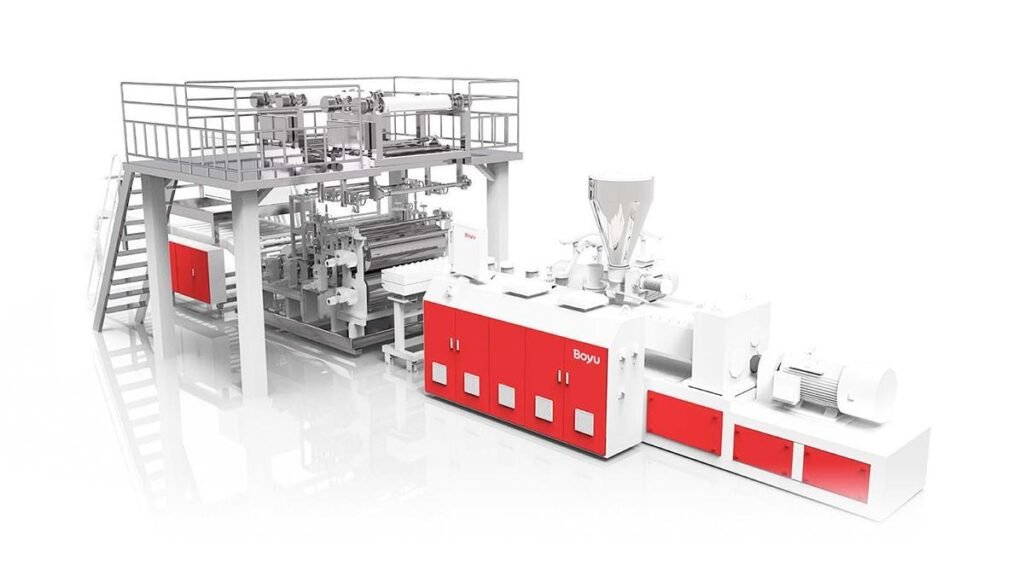
Because residential and commercial SPC flooring require different production standards, manufacturers must ensure their production line is properly matched to the target application. The right equipment configuration directly determines board consistency, surface quality, and long-term production efficiency.
住宅与商业SPC地板对生产标准的要求各有侧重,因此制造商必须确保生产线配置与目标应用场景精准匹配。设备选型是否得当,将直接影响板材一致性、表面质量与长期生产效率。
Residential SPC flooring places greater emphasis on comfort and living experience, so production lines should prioritize the following capabilities:
- Higher dimensional and structural stability control to ensure flooring flatness for reliable click-lock installation. A precision calendering system maintains uniform pressure across the full board width, minimizing internal stress and preventing post-production warping or curling.
- Lamination processes suitable for medium wear layer configurations—typically 0.3mm to 0.5mm for residential products—balancing comfort and durability. Consistent bonding pressure and temperature control prevent delamination and preserve decorative film clarity over time.
- Support for diversified surface designs and texture expression, including Embossed-in-Register (EIR), to reproduce realistic wood grain and stone textures with high fidelity. Quick-change tooling reduces downtime when switching between designs, improving product appearance adaptability across market segments.
住宅SPC地板更注重舒适性与居住体验,因此生产线应优先具备以下能力:
- 更高的尺寸与结构稳定性控制能力,保障地板铺装平整度,确保卡扣安装可靠衔接。精密压延系统对板材全幅宽施加均匀压力,有效减少内应力,防止翘曲变形。
- 适配中等耐磨层配置的复合工艺(住宅产品通常为0.3mm至0.5mm),兼顾舒适性与耐用性。稳定的结合压力与温度控制,有效防止分层,并长期保持装饰膜的清晰度。
- 支持多样化表面设计与纹理表现,包含同步对花(EIR)技术,可高保真还原木纹与石材纹理。快速换模功能缩短设计切换停机时间,提升产品外观适配性。
On the other hand, commercial environments require higher durability and stability for SPC flooring, so production lines should strengthen the following capabilities:
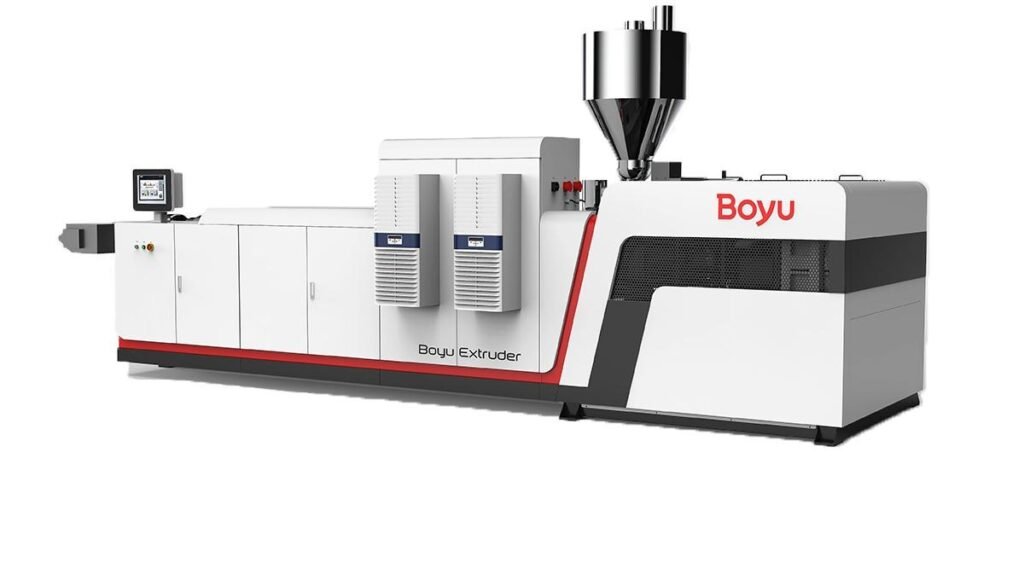
- High-strength extrusion systems to support high-filler and high-density formulations typical of commercial-grade SPC. A twin-screw extruder with optimized torque output and wear-resistant components ensures consistent melt flow, preventing surface defects and structural weak points in the finished board.
- High-precision calendering and forming control—typically within ±0.05mm thickness tolerance—to ensure dimensional consistency across the full production run, which is critical for large-scale commercial flooring installations.
- Enhanced wear layer lamination capability for 0.5mm to 0.7mm and above, ensuring deep, uniform bonding across the full panel surface—especially at edges where delamination most commonly begins under heavy foot traffic.
- Higher production capacity and continuous operation capability to meet large-scale order demands efficiently and consistently without performance degradation over extended production runs.
(Actual specification may vary by equipment model and production configuration; figures are for reference only)
You may also want to learn about the other factors to consider before selecting an extrusion line.
商业环境对SPC地板的耐用性与稳定性要求更高,因此生产线需强化以下能力:
- 高强度挤出系统,适配商业级SPC常用的高填充量、高密度配方。优化扭矩输出与耐磨部件的双螺杆挤出机,确保熔体流动稳定,防止成品板出现表面缺陷与结构薄弱点。
- 高精度压延与成型控制(厚度公差通常在±0.05mm以内),确保整批生产中的板材尺寸一致性,这对大规模商业铺装项目至关重要。
- 强化耐磨层复合工艺,适配0.5mm至0.7mm及以上厚度,确保整板表面深度均匀结合,尤其是最易在高流量踩踏下出现分层的板边位置。
- 更高产能与连续生产能力,高效稳定地满足大规模订单需求,长时间运行不出现性能衰减。
(实际数值因设备型号与生产配置而有所不同,以上数据仅供参考)
你可能还想了解选择挤出生产线前需要考虑哪些因素
Why Boyu Machinery Is the Right Production Partner
为何选择博宇塑机作为生产伙伴
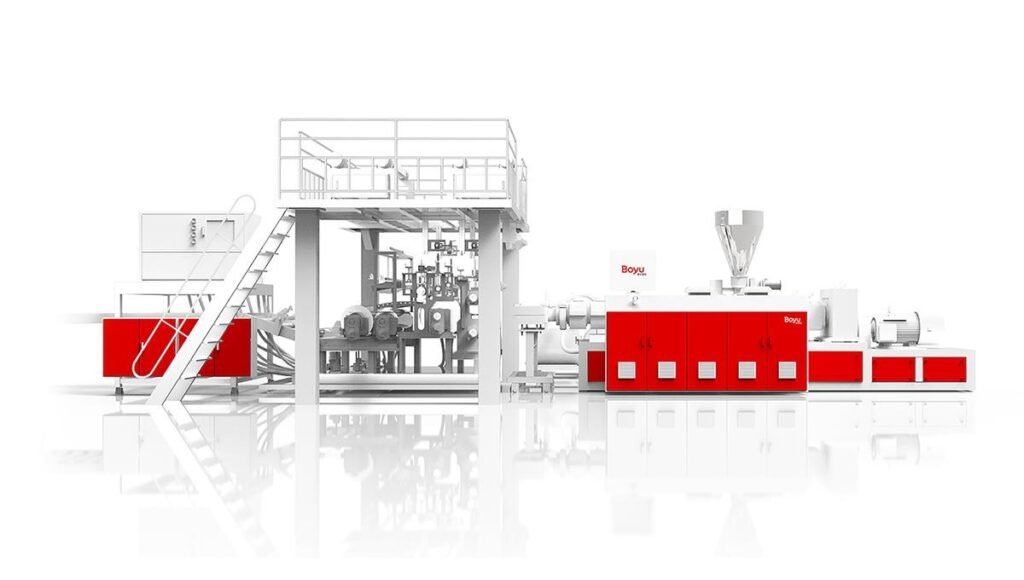
Boyu Machinery has been at the forefront of plastic extrusion technology since 1998. As a pioneer in SPC flooring equipment development since 2013, Boyu Machinery combines nearly 30 years of engineering expertise with more than 120 technical patents—including internationally recognized EIR patents in the US and Europe—to deliver solutions that meet the highest industry standards.
Boyu Machinery’s SPC line range covers models from SZJZ-80 to SZJZ-180, supporting production capacities from 6 to 100 tonnes per 24 hours and board widths of 1050 mm and 1350 mm, with thickness flexibility from 3 to 9 mm. All equipment is CE certified and features intelligent PLC control systems with components from Schneider, Siemens, and ABB.
Whether you are producing residential SPC vinyl flooring or high-performance commercial flooring, Boyu Machinery offers customized solutions backed by comprehensive technical support and after-sales service.
博宇塑机自1998年起深耕塑料挤出技术领域,并于2013年率先布局SPC地板设备研发。凭借近30年的挤出技术积累,博宇塑机已累计获得120余项技术专利,涵盖美国及欧洲的EIR国际发明专利,持续以最高行业标准交付解决方案。
博宇塑机的SPC生产线型号覆盖SZJZ-80至SZJZ-180,日产能6至100吨,支持1050mm与1350mm板材宽度,厚度范围3至9mm,全系通过CE认证。设备搭载智能PLC控制系统,核心电气元件采用施耐德、西门子及ABB品牌,确保生产精准稳定。
无论是住宅级SPC乙烯基地板还是高性能商业地板,博宇塑机均可提供定制化配置方案,并配套全面的技术支持与售后服务。
Conclusion
总结
Choosing the right SPC flooring production line starts with your target application. Residential products focus on comfort, design, and dimensional stability, while commercial products require stronger wear resistance and long-term production consistency. What is your biggest production challenge: flatness, lamination, surface design, output, or equipment stability? Share your thoughts below, or contact us to discuss your SPC flooring line needs.
选择合适的SPC地板生产线,应从目标应用场景出发。住宅产品更关注舒适性、设计表现与尺寸稳定性,商业产品则更强调耐磨性能与长期生产一致性。您在生产中遇到的最大挑战是什么:平整度、复合、表面设计、产能,还是设备稳定性?欢迎留言交流,或联系我们咨询您的SPC地板生产线需求。