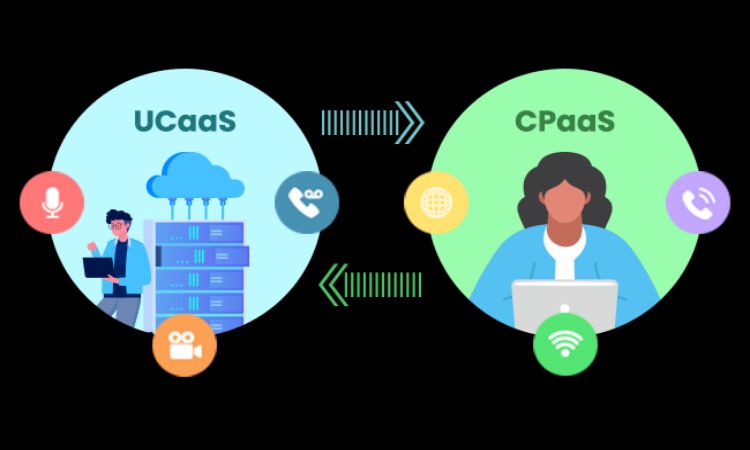
When you look at how we shop or ask for help today, it is clear that the old way of sitting on hold for an hour just won’t cut it anymore. We live in a world where we expect to move from a chat on a website to a phone call or a text message without having to repeat our problem to five different people along the way. To make this happen, businesses are starting to combine two powerful ideas that used to live in separate worlds,s known as CCaaS and CPaaS. While the first one gives a company the platform to manage a contact center the second one provides the building blocks to add custom features like video or automated alerts into the apps we use every day. Putting them together is like giving a driver a high-performance car and a perfect set of maps at the same time so they can get where they need to go without any wrong turns.
The Shift From Rigid Systems To Flexible Conversations
In the past, a contact centre was a very fixed thing that sat in a specific building with a specific set of tools, but the move to the cloud has changed all of that forever. Nowadays, a business can set up a full support team in a matter of hours and have them work from anywhere with an internet connection. The real magic happens when you stop thinking of these tools as separate products and start seeing them as a single user flow. When a company uses CCaaS as a framework, it can build a system that is not only stable but also very easy to change as customer needs evolve over time. If a new social media app becomes popular, you can just plug it into your existing flow instead of having to buy a whole new piece of hardware.
A customer might start a journey by clicking a link in an email and then decide they want to speak to a person about a specific detail. Companies like Tata Communications work in this space by providing the underlying network that keeps these different channels connected, so the agent on the other end can see exactly what the customer is looking at. This kind of visibility is what makes a conversation feel personal rather than just another ticket in a long queue. It is a very practical way to build trust because it shows the customer that you value their time and you are actually paying attention to their specific needs.
Why A Unified Approach Beats A Scattered One
One of the biggest headaches for any IT team is managing a dozen different tools that each have their own passwords and ways of working. By using CCaaS to bring everything under one roof, a company can simplify their back-end work while also making life much easier for the people who actually answer the phones. You do not want your staff to have to toggle between five screens just to find a customer’s address while the person on the line grows more frustrated by the second. When the messaging, voice calls, and data all live in the same environment, everything moves much faster, and there are fewer opportunities for mistakes.
We are also seeing that this combined approach makes it much easier to use smart automation and bots that actually help, rather than just being a nuisance. If the bot can see the user’s history, it can offer a much better solution or pass the call to a human at the perfect moment before the user gives up. This is a big part of why these technologies are redefining engagement: they allow a brand to be proactive rather than just waiting for someone to complain. It is about creating a path so smooth that the customer hardly notices the technology at all, and just remembers getting the help they needed without any stress.
The goal of any modern engagement plan should be to make the technology invisible so that the human connection can actually happen. When you have the right platform in place, you can spend more time thinking about what you want to say to your customers rather than worrying about how to reach them. As we move forward, the companies that can bridge these gaps will be the ones that stay ahead of the curve in a very crowded market.