Introduction: Why Vietnamese Food Is Often Misjudged by Travelers
Sometimes, the cuisines of a particular country amaze us, not just for the new taste it offers, but different tastes of the same cuisine in different parts of the country.
For example, the bowl of Pho in Hanoi does not have the same taste when you try this cuisine in the bustling streets of Ho Chi Minh City.
Though the Vietnam tour package offers an endless list of cuisine delights to first-time visitors, they mostly make a critical mistake: They judge Vietnamese food too quickly. It does not do justice to the country that offers a diverse range of cuisines that will develop completely new tastebuds.
Remember, it is not “what you eat,” but “where you eat,” that matters when you are trying to understand Vietnamese food. When you order the famous South Vietnamese cuisine in the North, it will not serve the purpose as it is not the original taste that you should be enjoying. Furthermore, combining the famous South Vietnamese dish with the North cuisine will also lead to a wrong impression about the Vietnamese cuisine.
This guide helps you here. We have covered everything that you need to know about Vietnamese cuisines, while keeping regional authenticity. This Vietnam street food guide navigates you through the vibrant cuisine landscape , ensuring that you enjoy the Vietnamese delicacies where they truly belong. This guide will make your Vietnam tours more rewarding and captivating.
Why Vietnamese Food Is So Diverse (From North to South)
The reason why Vietnamese food is so diverse, look at the map of the country. It stretches over 1,600 kilometers and with different climates. The North is cool, covered with mountains, while the South is tropical and fertile.
The North (Hanoi & Surroundings):
We can say that North Vietnam is the cradle of Vietnamese civilization. Here, the main focus is balance and restraint, with pure ingredients, subtle flavored and clear broths. North Vietnamese food is less spicy, less sweet, and less heavy than its counterparts.
The Center (Hue, Da Nang, Hoi An):
As the center part has dry and hot climate in summer, and flooded in winter, the food is intense. It leads to a preference for fermented and deeply savory flavors, with smaller, spicier, and complex dishes.
The South (Ho Chi Minh City & Mekong Delta):
It is the land of abundance, with its year-round warmth and the rich alluvial soil of the Mekong Delta. Here, the food is made with plentiful ingredients, with lots of sugar and coconut milk to satisfy their sweet teeth. The South Vietnamese cuisines are generous, vibrant, and influenced by the trade routes and neighbouring cultures of Thailand and Cambodia.
When you understand this flavor logic, you will come to know why the Vietnamese dining culture is so diverse and different as you navigate from the North to Center to South Vietnam.
What to Eat in Vietnam: Must-Try Dishes by Region & Destination
To keep mistakes and misconceptions away during your Vietnam tour packages, we have presented this regional guide for you. Let’s go through these iconic dishes that define each area, ensuring that you enjoy each cuisine with context and intention.
Northern Vietnam: Lighter Flavors & Subtle Broths
Northern Vietnamese food is all about savoring the essence of ingredients. In North Vietnam, you will find the best Vietnamese dishes in their most ancestral forms.
Hanoi – The Heart of Traditional Northern Cuisine
Hanoi is the epicenter of Northern cuisine tradition with delicious dishes that represent the traditions of the country.
- Pho (Beef or Chicken Noodle Soup): This is a standard breakfast staple in Hanoi. The broth is clear and savory, flavored with charred ginger and star anise. It is not cluttered with herbs and other sauces, it shows the clarity of beef or chicken.
- Bun Cha (Grilled Pork with Noodles): It is another famous cuisine where grilled pork patties are served in a light dipping sauce with cold rice noodles. The dish gained popularity after Anthony Bourdain and Barack Obama shared a meal in Hanoi.
- Banh Mi: You can find this dish anywhere in Vietnam, the Hanoi Banh Mi is simple, with high-quality pãté and butter rather than making cold cuts.
- Ha Long Bay – Seafood Built Around Freshness: When you have booked a Vietnam tour package that includes a cruise, you will be enjoying some delicious Ha Long seafood cuisines, including Cha Muc, fried squid patties, which are hand-pounded to maintain a bouncy, firm texture.
- Ninh Binh Goat Meat: As the karst limestone mountains of Ninh Binh are home to goats, you will find a wide range of goat cuisines, made with mountain herbs. The meat is delicious, often grilled or stir-fried, and served with salt, like, and chili dip.
Central Vietnam: Bolder Flavors Shaped by History & Climate
Central Vietnam is a favorite for tourists who are on luxury Vietnam tours because of its sophisticated history. The central Vietnam dishes tell the stories of emperors and the resilience of the people.
Hue – Refined Dishes with Royal Roots
Being the former imperial capital, the dishes of Hue were designed to please imperiors.
- Bun Bo Hue: This is the most complex food to try in Vietnam, with its spicy, sour, salty, and sweet broth and a distinct lemongrass aroma and a fermented shrimp paste kick.
- Royal Rice Cakes (Banh Beo, Banh Nam, Banh Loc): These rice cakes are small and delicate topped with dried shrimp and pork cracklings. They represent the central preference for quality over quantity – many small plates rather than one large bowl.
Da Nang – Everyday Central Vietnamese Food
Being coastal cities this is a food lover’s paradise, as dishes available here cannot be found anywhere else.
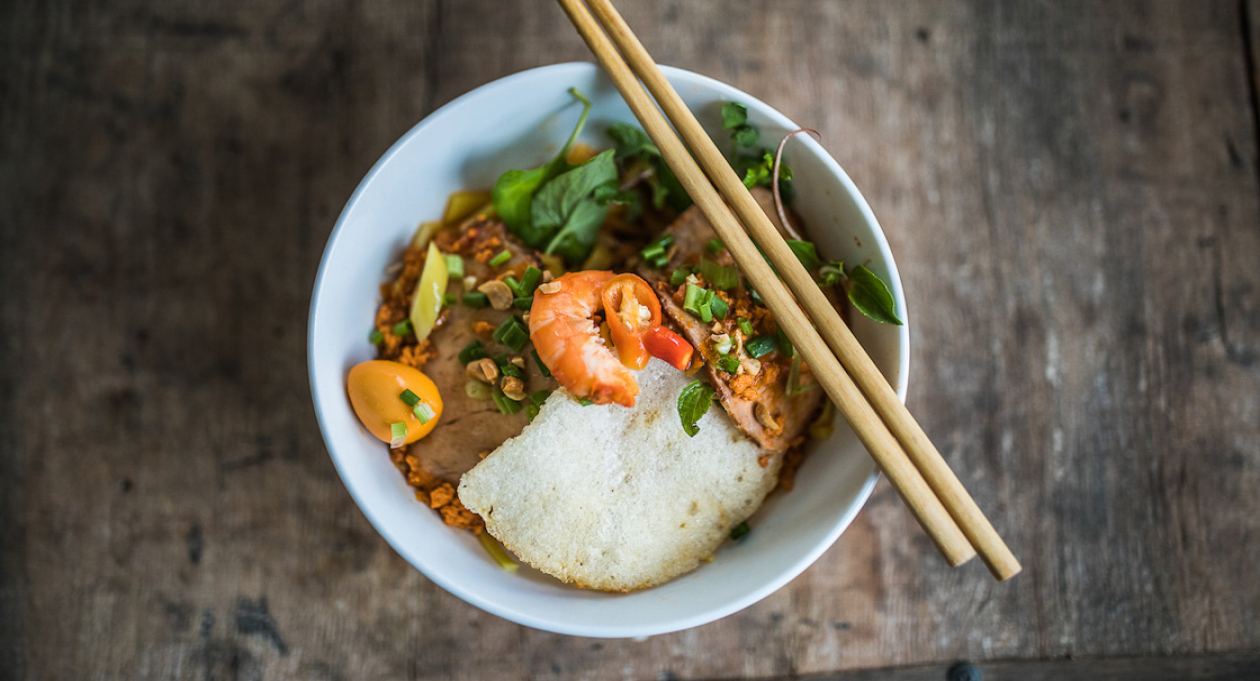
- Mi Quang (Quang Style Noodle): Being the signature dish of the Da Nang region, Mi Quang tops in texture and color. The turmeric-stained rice noodles are served with a tiny amount of broth, and topped with pork, shrimp, peanuts, and fresh herbs.
- Cao Lau (Hoi An Style Noodles): This is also a famous dish of Hoi An, thick and rough-textured noodles, made using water drawn from the ancient Ba Le well and ash from local trees. It is served with sliced pork, fresh greens, and crispy croutons.
- Hoi An Style Banh Mi: Anthony Bourdain’s favorite Vietnamese cuisine, Banh Mi has the crispy baguette and the fillings of grilled pork, pate, and local vegetables.
Southern Vietnam: Sweeter, Generous & Vibrant
The South is where the Vietnam street food guide becomes most dense. Here, the cuisines are bold, inspired by Cambodian and Thai dishes, and sweetened with coconut milk and palm sugar.
Ho Chi Minh City – Everyday Food, Endless Variations
- Com Tam (Broken Rice): It was originally a dish made from fractured rice grains that couldn’t be sold, it is now a breakfast staple made of grilled pork ribs, steamed egg meatloaf, and scallion oil.
- Banh Trang Tron (Mixed Rice Paper): It is a famous street food staple consisting of shredded rice paper mixed with dried shrimp, quail eggs, green mango and herbs.
Mekong Delta – Food Shaped by Rivers & Seasons
Your Vietnam tour isn’t complete if you haven’t tasted Mekong Delta food, where the river dictates the menu.
- Freshwater Fish: The delta is famous for the snakehead fish and is grilled over straw, to give a unique smoky aroma. It is served with a mountain of fresh herbs and rice paper for wrapping. You can also enjoy the special sour soup (canh chua) made with fish, pineapple z tomatoes, and okra.
- Coconut Candy and Tropical Fruits: If you are a fruit lover, you will love South Vietnam. Some of the highlights are coconut candies, and fruit dishes.
Food Safety & Eating Tips for Travelers in Vietnam
A common question that travelers ask: Is Vietnam street food safe? Well, the answer is yes, but you must follow these precautions.
- Follow the Crowd: Choose outlets and street stalls where you find a high turnover as more customers means the ingredients are fresh.
- Look for Hygiene: You must observe how food is handled. Do they keep raw and cooked ingredients separate? Does the vendor use gloves? Is the cooking area clean?
- Start with Cooked Food: Go for the dishes that are cooked at high temperatures, like a streaming bowl of Pho or a dazzling Banh Xeo.
- Ice and Water: Mostly, stick to bottled water. If you get a drink from a street vendor, ask for it without ice.
- Vegetarian Options: While Vietnam is a paradise for meat-lovers, there are various vegetarian options, especially in Buddhist areas. Some of the vegetation cuisines are Com Chat, Banh Mi Chay, and fresh spring rolls.
- Prices: Always ask the price before ordering to avoid misunderstandings and confusion.
Understanding Vietnamese Dining Culture
- Street Food vs. Restaurants: The line between street food and restaurants is often blurred in Vietnam. You will find families that are running a family stall for generations, serving only one speciality.
- Sharing is Caring: To enjoy the best Vietnamese dishes, tourists often order multiple dishes to share with other fellows, to enjoy multiple dishes.
- Utensils: Vietnamese food is often served with chopsticks or a spoon. Ask for a fork if you are not familiar with chopsticks.
- Fresh Preparation: Most Vietnamese dishes are cooked fresh. Wait for some time after ordering the dishes.
Vietnamese Food & Smart Travel Planning
A journey to Vietnam is a journey through its kitchens. Make sure that you design an itinerary smartly to enjoy as many cuisines as possible.
When you book a sustainable travel vietnam, look for experiences that go beyond the standard tourist menu. Incorporate regional differences to turn each lunch and dinner into cultural experiences. Explore street food and enroll for cooking classes in a Hoi An village to try your hand at cooking local dishes. For exclusive dining experiences, go for luxury Vietnam tours.
Common Questions Travelers Have About Vietnamese Food
Is Vietnamese food spicy?
Generally no. However it depends on the region. While Northern Good is mild, Central Vietnam food is spicy and sour.
Is street food in Vietnam safe for travelers?
Yes, Vietnam street food is safe as the local vendors are selling freshly-cooked dishes with fresh ingredients. Make sure that you order from busy street stalls and ensure that it is served hot.
Is Vietnamese food vegetarian-friendly?
Yes, most Vietnamese dishes rely on fresh vegetables, herbs, and tofu, making it easy for tourists to find vegetable dishes even in meat-dominent areas.
How should first-time visitors approach Vietnamese food?
First-time visitors must make sure to eat regional foods in specific regions. Make sure that you don’t eat famous Southern dishes in the North or you will not enjoy the cuisine experiences fully.
Can I find all famous Vietnamese dishes in Hanoi or Ho Chi Minh City?
While you can find Pho in Saigon and Com Tam in Hanoi, they don’t taste as good as they are in their home regions. For the best experience, eat regionally.
Conclusion: Eating Vietnamese Food Where It Truly Belongs
Food is an important part of any tour and Vietnam is a home to some delicious and authentic cuisines. It represents culture, history, and geography. Exploring Vietnamese regional cuisines is the best way to fully indulge into the culture. Don’t restrict yourself to just some famous cuisines, and go deeper to experience the aromas of unknown delicacies.
Whether you are booking a Vietnam travel package first-time, or returning for a deeper dive into the culture, make sure that you don’t miss to try out new local dishes that are not available in fancy hotels and restaurants, but on remote streets.