Security once lived in a world of steel keys, paper logs, and a guard with a torch patrolling dark corridors. That world is fading, and a fresh frontier called hybrid security is rising. It is bold, fast, and adaptive.
Hybrid security merges human intuition with digital precision. It brings together the alert instincts of trained officers and the constant vigilance of intelligent machines. The result is a system that breathes, watches, learns, and reacts.
This new model has transformed the landscape for security firms in Sydney. Let’s see how in this blog post.
The Power of Human Judgment
Human judgment has always played a central role in security. Officers read behaviour, interpret body language, sense tension in a room before anything erupts, listen to tone, and perceive hesitation. They can even detect danger hidden behind a casual smile. Technology cannot replicate that instinct—At least not yet.
The Rise of Intelligent Machines
Smart systems excel in other ways. They monitor dozens of locations at once, scan dark corners, track movement around the clock, generate alerts with swift accuracy, see patterns, pull data, and create timelines. Even after a long shift, they do not get tired and their lens remains unclouded.
Where Human Skill Meets Digital Precision
Hybrid security combines those strengths. Officers gain tools that heighten awareness, while machines receive guidance that sharpens focus. This partnership produces remarkable results.
How AI Surveillance Transforms Vigilance
A modern hybrid system can begin with intelligent surveillance.
Cameras no longer act as silent observers. They analyse frames, recognise faces, detect unusual behaviours, and sense loitering. Then, the system also alerts on-site officers in real time. Officers then interpret the alert through a human lens. They decide whether the threat is real or harmless.
This creates efficiency and eliminates guesswork. Here are some ways.
Digital Tools That Reinvent Patrol Work
Patrol work has also evolved. Officers once walked long routes with minimal visibility. They had limited back-up. Now they carry digital devices linked to central systems. These tools display live feeds, map patrol zones, track incidents, and send status updates.
With this help, officers move with sharper awareness. They become nodes in a connected web.
The Expanding Role of Drones
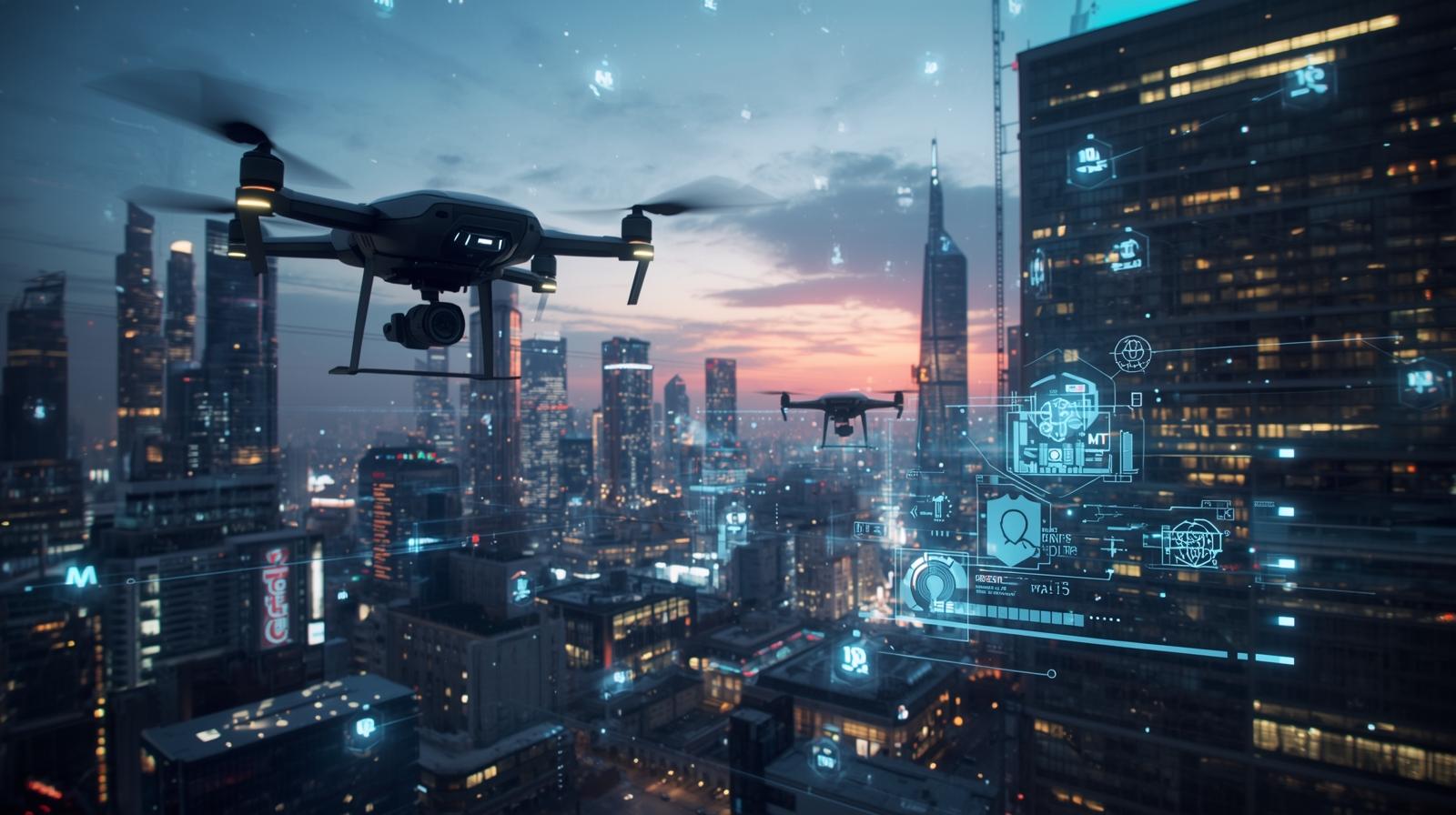
Drones add another layer. They soar over large properties, inspecting rooftops and patrolling fenced boundaries. They fly into areas too risky for people, and their aerial view gives officers fresh intelligence. This helps teams respond with speed and accuracy.
Smarter Access Control for Safer Spaces
Access control has also shifted, as traditional keys were slow. They were easy to lose and difficult to track. So, hybrid security replaced them with smart credentials. These include facial recognition systems, biometric scanners, digital badges, and mobile passes. Each tool logs movement and restricts unauthorised entry.
This helps officers to view access events instantly and lock doors remotely. They can also issue temporary passes. Every action leaves a trace.
The Nerve Centre: Monitoring Rooms
Monitoring centres complete the ecosystem. These rooms hum with screens and pulse with data. They serve as the brain of hybrid security operations. Here, staff analyse alerts, coordinate responses, connect with officers in the field, and manage emergencies with structured precision. Their work blends fast thinking with technological clarity.
The Human Touch That No Machine Can Replace
Despite this digital power, human presence remains essential. Machines cannot calm a frightened visitor or settle a heated dispute. They also cannot guide hundreds of people during an evacuation. In short, there is a limit to what a tool can do without help from a human.
So, a trained officer still steps into that role with confidence. Their emotional intelligence fills the gaps technology cannot close.
Training the Modern Hybrid Officer
Technology continues to evolve. Artificial intelligence grows smarter each year. Machine learning becomes more refined, and predictive analytics improve accuracy. Yet these innovations do not replace officers. They can only empower them. Officers become decision-makers rather than mere watchers. They focus on judgment, handling complex situations, and using technology as an extension of their awareness.
This partnership requires training. Security personnel must learn how to use digital tools. They must understand data interpretation and become comfortable with dashboards. They must maintain traditional skills while embracing new ones.
So, training programs now include modules on AI behaviour, cyber-physical integration, and real-time communication tools. The modern officer becomes a hybrid professional.
Common Fears and Balanced Realities
Some people fear this shift. They worry about machines replacing jobs or the chance of violating their privacy. They also worry about too much reliance on digital systems. These concerns deserve attention, and hybrid security addresses them with balance.
Technology does not eliminate human responsibility. It enhances it. Privacy protocols ensure ethical use of data. Backup systems protect operations during outages. Transparency builds trust.
So, in the end, it’s all about how we use technology.
The Final Word
The rise of hybrid security is not a trend. It is a transformation that reshapes expectations and inspires confidence. If done right, it can create harmony between human skill and technological muscle. It reveals a future where safety becomes smarter, stronger, and more brilliant than ever before.
Human intelligence lifts technology, and technology elevates human intelligence. Together, they create a fortress that adapts, evolves, and endures. This is the rise of hybrid security.
If you want to create a hybrid security protocol for your home or business, feel free to connect with Velox Security. You will find all your answers there.