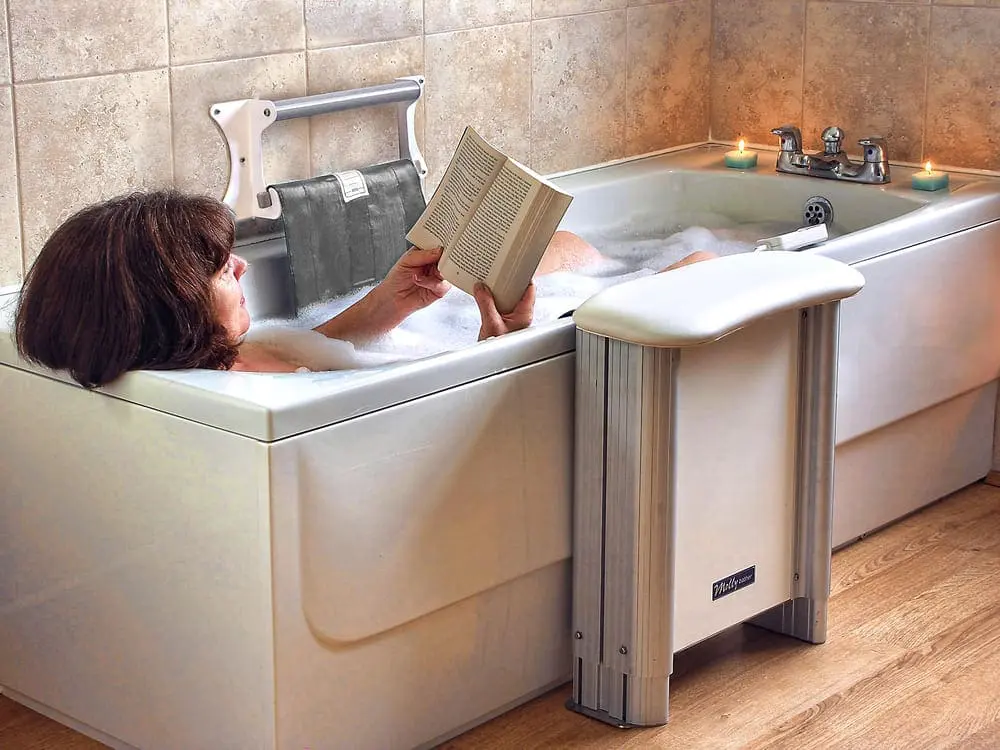
Bathrooms are strange spaces when you think about them.
Hard floors. Steam. Slippery edges. Tight corners. They are also private places, where people do not want help hovering too close. That mix makes them one of the most high-risk rooms in any Australian home.
This is where a bath lifter tends to enter the picture. Not dramatically. Usually after a near miss. Or a moment that felt a bit too close for comfort. Maybe someone struggled to get out of the tub. Maybe a carer felt the strain in their back. Maybe confidence quietly dropped.
These devices rarely arrive early. They arrive when people realise that bathing has become harder than it used to be.
What a bath Lifter Actually Does, in Real Terms
A bath ldoes not rush things.
It lowers a person into the bath slowly, evenly, and with control. Then it brings them back up again. No pulling. No awkward lifting. No sudden movements.
What matters most is that the person using it stays involved. They are not being moved around like an object. They sit, hold, balance, and feel in control of their body throughout the process.
That sense of participation is often what people notice first. Relief follows soon after.
Why Bathrooms Are Where Independence Slips First
People often cope in other areas long before the bathroom becomes a problem.
They manage walking with aids. They sit carefully. They adjust routines. But getting in and out of a bath asks for balance, strength, timing, and trust in one movement.
That is why bath lifter services exist at all. A bath lifter supports that one vulnerable transition without turning bathing into a clinical task.
It keeps the routine familiar. Same tub. Same soap. Same quiet moment.
Just safer.
When a Bath Lifter Makes More Sense Than a Renovation
Bathroom renovations are expensive. Time-consuming. Disruptive.
For many families, installing a bath lifter becomes a practical alternative. No tiles ripped out. No plumbing changes. No weeks of noise.
It is not always the final solution. But it buys time. Sometimes months. Sometimes years.
That breathing space matters, especially when health needs are still changing.
How Funding and Assessments Usually Work
In Australia, access to bath lifter services often involves allied health input.
Occupational therapists look at mobility, balance, transfers, and fatigue. They assess whether a bath lifter is safe and appropriate, not just convenient.
For many people, this happens under NDIS supports or aged care pathways. The process can feel slow, but it exists for a reason. Bathroom equipment must match the person, not just the space.
Training Is Where Safety Actually Lives
One of the quiet risks with a bath lifter is assuming it is self-explanatory.
It is not.
Seat positioning. Suction placement. Battery care. Entry and exit technique. All of it matters.
Good providers take time with this. They demonstrate. They watch carers practise. They adjust positioning until it feels right.
This training often makes the difference between equipment that sits unused and equipment that becomes part of everyday life.
Short-Term Use Is More Common Than People Expect
A bath lifter is not always a long-term commitment.
After surgery. After hospital discharge. During rehabilitation. It is often used temporarily while strength and balance rebuild.
Short-term support prevents falls during recovery, which is when people are most vulnerable. It also reduces anxiety, which can be just as limiting as physical weakness.
Temporary does not mean unnecessary. In many cases, it is exactly the right response.
Dignity Is the Part That Is Hard to Measure
Bathing is personal.
Losing privacy here hits differently. It affects confidence, identity, and mood.
A bath lifter allows people to bathe without someone lifting them by hand or hovering too close. That distance preserves dignity in subtle but powerful ways.
For carers, it also changes the relationship. Less physical strain. Less tension. More calm.
Australian Homes Are Not All Built the Same
Older houses. Deep tubs. Narrow bathrooms. Regional properties with quirks.
A bath lifter has to work within real homes, not ideal layouts. This is why assessment and trial matter so much in Australia.
What fits in one bathroom may not fit in another. Services that understand this adapt, rather than forcing a standard solution.
When a Bath Lifter Is Not the Right Choice
It is important to say this clearly.
A bath lifter is not suitable for everyone. If someone cannot sit safely. If trunk control is poor. If instructions cannot be followed. Other options may be safer.
Good providers say no when needed. That honesty protects everyone involved.
Why These Services Matter More Than They Seem
A bath lifter from CHS Healthcare rarely feels like a big decision at first.
But it often becomes the reason someone keeps bathing at home. The reason carers avoid injury. The reason confidence stays intact a little longer.
In a space where dignity and safety collide, quiet support tends to work best.
And sometimes, that is enough to change everything.