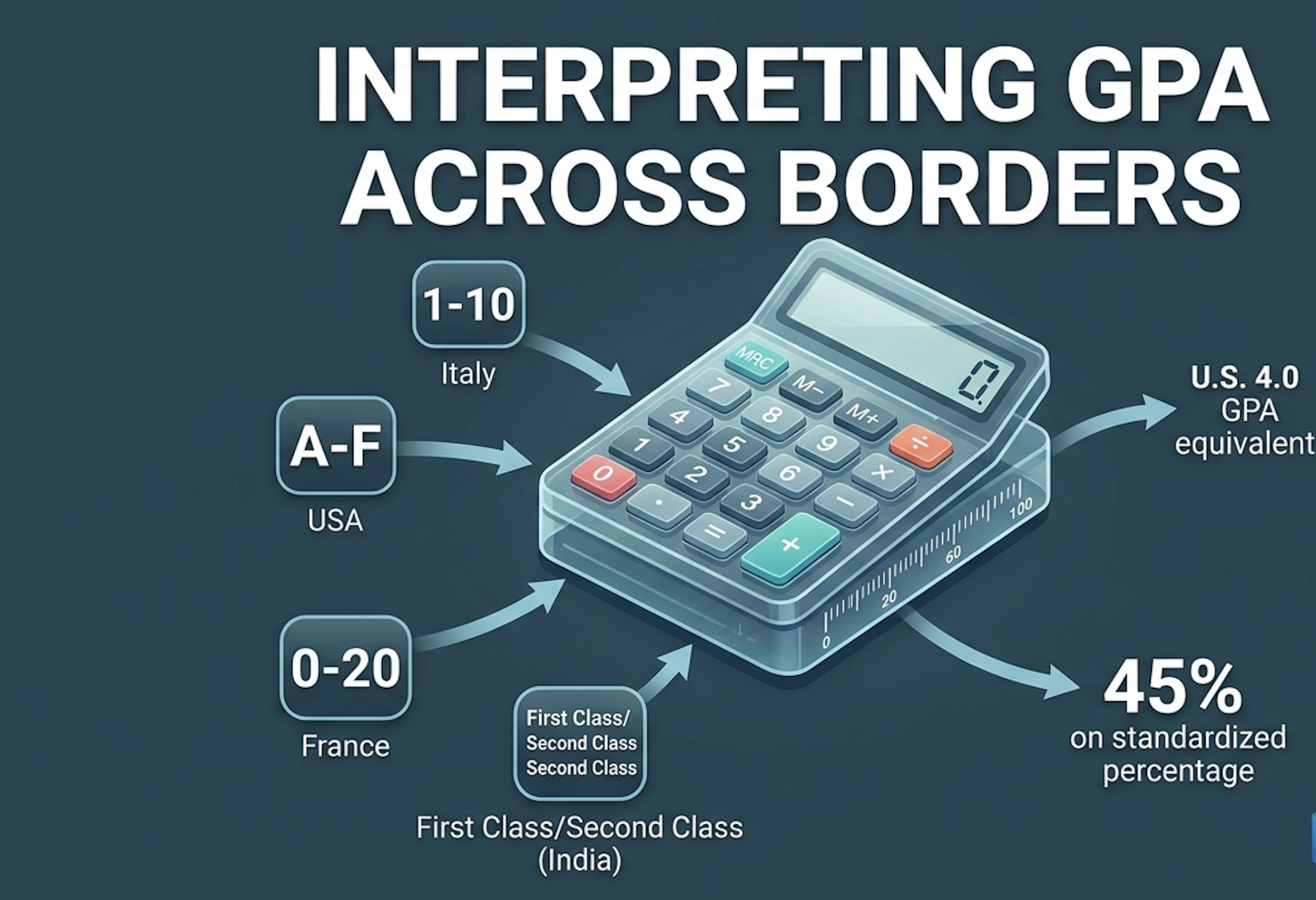
Applying to universities abroad may seem fancy as it sounds but actually, it has challenges. One of the most confusing aspects for international students is understanding how admissions teams evaluate their academic records. Since grading systems differ so dramatically from country to country, universities cannot simply compare numbers side by side. Instead, they use a combination of contextual analysis, institutional knowledge, and specialized tools to interpret foreign grades fairly and accurately.
If you’re an aspirant, this guide runs through how assessors evaluate applicants to qualify into their list.
The Problem with Direct Grade Conversion
Grading scales around the world vary widely. Some countries use percentage-based systems, others rely on letter grades, numerical scales, or classifications like “Distinction” or “First Class Honors.” Universities in the United States, for example, work on a 4.0 GPA scale, which means international grades must be translated into a format that fits within this framework.
However, a straightforward numerical conversion rarely tells the whole story. A grade that looks average on paper may actually reflect strong academic performance in a country where instructors grade conservatively. For this reason, admissions officers look well beyond the numbers.
Context Is the Most Important Factor
When reviewing international applications, universities prioritize context over raw scores. Admissions teams study the grading norms of specific countries and educational systems, often using internal guidelines or historical data to understand what a particular grade actually represents.
This means that a student from a country with rigorous academic standards and strict grading practices will not be penalized simply because their scores appear lower. Instead, their performance is evaluated relative to what is considered competitive within their own academic environment. Understanding this distinction can be reassuring for applicants who worry their grades may not translate well.
Institutional Reputation and Program Rigor
Beyond the grading system itself, universities also weigh the reputation and academic rigor of the institution attended. A slightly lower GPA earned at a highly competitive university may carry more weight than a higher GPA from a less demanding program.
Admissions officers assess whether an applicant’s coursework was genuinely challenging and whether their institution maintains recognized academic standards. This broader evaluation ensures that grade point averages are interpreted as indicators of real academic ability rather than just numerical achievements.
Course Selection and Grade Trends Matter
Admissions committees also examine which specific courses an applicant took and how their performance evolved. Students who challenged themselves with advanced or field-relevant coursework demonstrate academic initiative, even if their overall GPA is not perfect.
A consistent upward trend in grades is particularly meaningful, as it signals resilience, personal growth, and the ability to adapt to challenging environments. Steady high performance in advanced subjects, on the other hand, reflects academic preparedness and discipline. These qualitative patterns often influence admissions decisions just as much as the GPA figure itself.
The Role of Credential Evaluation Services
Many universities partner with or recommend credential evaluation services that convert international academic records into U.S.-equivalent GPAs using established methodologies. These evaluations provide admissions teams with a standardized reference point when comparing applicants from diverse educational backgrounds.
That said, a converted GPA is never treated as the final word on an applicant’s potential. It functions as one data point within a much broader, holistic review process that includes personal essays, letters of recommendation, standardized test scores where required, and extracurricular achievements.
How Applicants Can Prepare
For international students, using a free GPA calculator before applying can be a practical first step. While these tools are not official, they offer a useful estimate of how grades might translate and can help applicants set realistic expectations early in the process.
A free GPA calculator can also highlight whether additional coursework or academic improvements might strengthen an application before submission. Being proactive about understanding your academic profile gives you a clearer picture of where you stand competitively.
Moving Beyond Common Misconceptions
Many international applicants mistakenly believe they must hit a specific GPA threshold to be considered. In reality, most universities do not apply rigid numerical cutoffs to international grades. Admissions decisions are shaped by the full context of an applicant’s academic background, not a single number.
It is equally important to remember that strong grades alone do not guarantee admission. Universities consistently seek well-rounded candidates who demonstrate critical thinking, leadership potential, and genuine purpose. A compelling personal statement and strong recommendations can meaningfully elevate an application even when the GPA is not perfect.
Conclusion
Understanding how universities interpret international GPA removes much of the guesswork from the admissions process. By considering grading norms, institutional context, course rigor, and overall academic trajectory, universities work to evaluate every applicant fairly.
International students who approach their applications with this knowledge, and who present a complete, well-rounded profile, are far better positioned to succeed in competitive admissions environments.