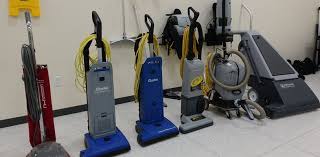
Most breakdowns don’t happen on the worst day. That’s the strange part. You’d expect a machine to give up during a chaotic shift or a high-pressure clean. But in most New Zealand facilities, issues with Commercial Vacuum Cleaners start on very normal days. Quiet ones. Routine ones. The kind where everything appears to be working.
That’s partly why problems linger. A vacuum still turns on. Still moves across the floor. Still collects something. So no one calls it a failure. It just becomes slightly harder to get the same result, and people adjust without really noticing they’ve adjusted.
High-Use Spaces Create Wear That’s Easy to Miss
Commercial environments wear equipment down differently than homes. It’s not misuse, it’s repetition. Corridors cleaned daily. Entranceways hit multiple times a shift. Carpet tiles that trap fine dust rather than visible debris.
With Commercial Vacuum Cleaners, this kind of use creates low-visibility damage. Filters load up faster than expected. Airflow narrows slowly. Motors compensate by running hotter for longer periods.
Because cleaning still gets done, the equipment doesn’t feel broken. It just feels less efficient, which is harder to measure and easier to tolerate.
Why Suction Loss Is Usually a Late Warning
When someone finally flags an issue, it’s often about suction. That’s fair. It’s the most obvious thing to notice. But with Commercial Vacuum Cleaners, suction loss is rarely where the problem began.
Long before suction drops, airflow has usually been restricted for a while. Filters overdue for replacement. Hoses partially blocked. Seals that no longer sit flush. Each issue on its own seems minor. Together, they change how the system behaves.
The motor keeps up, until it can’t. And when it stops keeping up, it feels sudden even though it wasn’t.
Cleaning Teams Adapt Before Equipment Breaks
One of the quieter challenges in commercial settings is human adaptability. When a vacuum becomes less effective, operators don’t usually stop. They change how they work. More passes. Slower pace. Extra attention on visible dirt.
This adaptability masks the decline of Commercial Vacuum Cleaners remarkably well. Cleaning still happens. Standards appear met. The cost shows up elsewhere, usually in time and fatigue.
From the outside, nothing looks wrong. Internally, efficiency has already slipped.
Noise Is Often the First Honest Signal
Machines rarely fail silently. They complain first. A change in pitch. A rattle that wasn’t there last month. A heavier sound when the motor starts up.
In Commercial Vacuum Cleaners, noise often points to friction, imbalance, or airflow strain. In busy environments, these sounds are easy to miss. Background noise covers them. Headphones block them out.
But noise tends to arrive earlier than performance failure. Paying attention to it can feel fussy, but it often prevents larger issues later.
Preventative Servicing Is About Predictability, Not Perfection
There’s sometimes an assumption that servicing should make equipment feel new again. In commercial settings, that’s rarely the goal. The goal is predictability.
With Commercial Vacuum Cleaners, preventative servicing focuses on restoring balance. Clearing airflow paths. Replacing wear components before they stress more expensive parts. Reducing heat and vibration inside the motor.
This kind of servicing doesn’t eliminate repairs forever. It spaces them out. It turns unexpected downtime into scheduled maintenance, which matters more than it sounds when multiple sites rely on the same equipment.
Downtime Costs More Than the Repair Itself
In commercial cleaning, a vacuum failing mid-shift does more than create a repair bill. It disrupts schedules. Backup machines get overused. Staff lose time adjusting.
That’s why Commercial Vacuum Cleaners are often serviced earlier than domestic machines. Not because they’re fragile, but because the cost of failure is higher. One unreliable machine can ripple across an entire cleaning run.
Seen this way, servicing becomes an operational decision rather than a technical one.
Different Environments Stress Vacuums in Different Ways
Not all commercial spaces treat equipment the same. Offices generate fine dust that clogs filters. Retail spaces introduce grit that wears components. Warehouses add heavier debris. Schools and healthcare settings demand consistent filtration.
Commercial Vacuum Cleaners respond differently depending on where they’re used. A model that performs well in one environment may struggle in another if maintenance routines don’t adapt.
This is why fixed servicing schedules don’t always hold up. Usage patterns matter more than dates on a calendar.
Knowing When Replacement Is the Sensible Option
There is a point where repair stops making sense. Motors reach the end of their working life. Parts become hard to source. Structural wear affects reliability or safety.
The challenge with Commercial Vacuum Cleaners is recognising that point without guessing too early. A machine that looks rough may still have useful life left. Another that looks fine externally could be close to failure internally.
Clear service history helps here. Equipment that’s been maintained tends to give clearer warning signs. Equipment that hasn’t often fails more abruptly, forcing rushed decisions.
A Less Tidy Way to Think About Equipment Care
Vacuum cleaners aren’t centre-stage equipment. They’re meant to fade into the background. But Commercial Vacuum Cleaners from About Clean sit quietly at the core of cleaning operations, shaping efficiency and outcomes without much attention.
Thinking about servicing as part of the normal rhythm of operations, rather than a response to breakdowns, changes how issues get handled. Fewer surprises. More predictable performance. Less pressure when decisions come up.
There’s no perfect formula. Just patterns that repeat often enough to be worth noticing, ideally before “still working” quietly becomes “not really.”