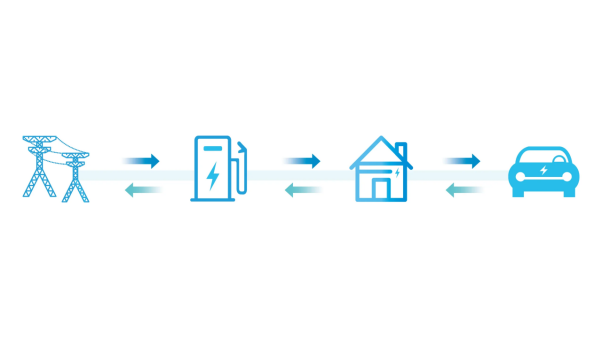
Electric vehicles are no longer just a way to get from one place to another. With bidirectional charging, an EV can act as a mobile energy storage unit. It can power homes, support the grid, and even charge another vehicle. Many automakers and EV charging manufacturers are introducing or planning such technology.
Several forms of bidirectional EV charging now exist, including V2G, V2H, V2B, V2L, V2V, and V2F. Each mode serves a different purpose, from home backup power to farm operations. Understanding these options helps users unlock the full value of bidirectional charging.
What is Bidirectional Charging?
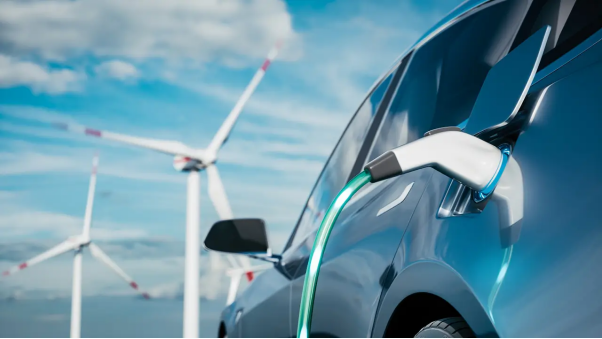
Traditional EV charging is a one-way street: electricity flows from the grid into the vehicle’s battery. Bidirectional charging, however, allows for a two-way flow of energy.
This requires a compatible bidirectional charger and a vehicle designed to support this function. The charger converts AC power to DC for charging, and DC back to AC when sending power out. Smart control systems manage safety and energy flow.
This “Vehicle-to-Everything” (V2X) capability effectively turns an EV into a “battery on wheels.” Instead of sitting idle most of the day, a parked EV can supply electricity when needed, supporting homes, buildings, farms, other vehicles, and even the public grid.
The following are several bidirectional charging applications:
V2G (Vehicle-to-Grid)
Vehicle-to-Grid (V2G) is perhaps the main form of bidirectional charging. It involves a communication link between the EV, the bidirectional charger, and the public electrical grid.
In a V2G ecosystem, EVs discharge power back to the grid during peak demand periods. This helps utilities manage loads without firing up expensive, carbon-heavy peak power plants.
For the investor, V2G offers a clear ROI through electricity distribution, where energy companies pay EV owners or fleet operators to help stabilize the grid.
V2H (Vehicle-to-Home)
Vehicle-to-Home (V2H) focuses on residential energy resilience. Instead of feeding the grid, the bidirectional EV charging system directs power into your home equipment.
- Backup Power: During a blackout, an EV with a large battery (like 70-100 kWh) can power a home for several days. Lights, refrigerators, routers, and medical devices can continue operating.
- Cost Savings: By using “Time-of-Use” electricity pricing, homeowners can charge their EV when rates are lowest and use that stored energy to power their homes when rates peak in the evening. In homes with solar panels, bidirectional charging stores excess daytime solar power in the car for evening use.
As a bidirectional charging solution, V2H is becoming a selling point for premium cars and home charging installations.
V2B (Vehicle-to-Building)
Vehicle-to-Building (V2B) operates on the same principle as V2H but at a commercial scale. In this scenario, a fleet of EVs parked at an office or apartment complex provides power to the facility.
For businesses, V2B is a powerful tool for “peak shaving.” Commercial electricity bills often include additional fees based on the highest level of electricity used during a month. By using bidirectional charging EV capabilities to lower that peak, businesses can save thousands in operational costs.
Furthermore, V2B provides critical redundancy for data centers or hospitals, ensuring that even if the grid fails, the building remains operational.
V2L (Vehicle-to-Load)
Vehicle-to-Load (V2L) is an accessible form of bidirectional charging. It doesn’t require a complex building integration or a high-end bidirectional charger. Instead, it uses a simple integrated outlet or adapter to power individual devices.
- Outdoor Activities: Powering grills, projectors, or lights while camping.
- Construction: Running heavy-duty power tools on sites without active grid connections.
- Emergency Situations: Charging phones, medical devices, or laptops during local outages.
Due to all these uses, V2L is an essential feature for the modern, multi-functional EV.
V2V (Vehicle-to-Vehicle)
Vehicle-to-Vehicle charging (V2V) allows one EV to charge another. This is particularly valuable for roadside assistance services and remote fleet operations.
If an EV runs out of juice miles from a station, another EV equipped with bidirectional charging can transfer enough range to get the stranded vehicle to the nearest charger. This “mobile battery” capability reduces range anxiety and highlights the benefits of a bidirectional EV charging network.
V2F (Vehicle-to-Farm)
A new application, Vehicle-to-Farm (V2F), uses the high-capacity batteries of electric trucks to power agricultural infrastructure. In remote rural areas, extending the grid is expensive. With bidirectional charging, a vehicle can:
- Power remote irrigation systems.
- Provide climate control for greenhouses.
- Maintain livestock facilities during outages.
- Power worker housing.
V2F demonstrates how bidirectional charging EV technology can lower the carbon footprint of food production while increasing the energy resilience of rural businesses.
What EVs Support Bidirectional Charging?
To utilize bidirectional charging, both the vehicle and the charging hardware must support this function. As of 2026, the list of compatible vehicles is growing.
| Manufacturer | Model | Supported Modes |
| Nissan | Leaf | V2G, V2H |
| Ford | F-150 Lightning | V2G |
| Hyundai | IONIQ 5, IONIQ 6 | V2L |
| Kia | EV6, Niro | V2L |
| Tesla | Cybertruck | V2H, V2L |
| Volkswagen | ID.4 | V2H |
| Mitsubishi | Outlander PHEV | V2L |
| Genesis | GV60 | V2L |
Many auto companies, such as Tesla, are working hard to equip more models with a bidirectional charging function.
Conclusion
Bidirectional charging is redefining the value of electric mobility. By integrating V2G, V2H, and other V2X modes, we create a more resilient, cost-effective, and sustainable energy landscape. For those investing in EV infrastructure, the shift toward bidirectional EV charging is a trend.