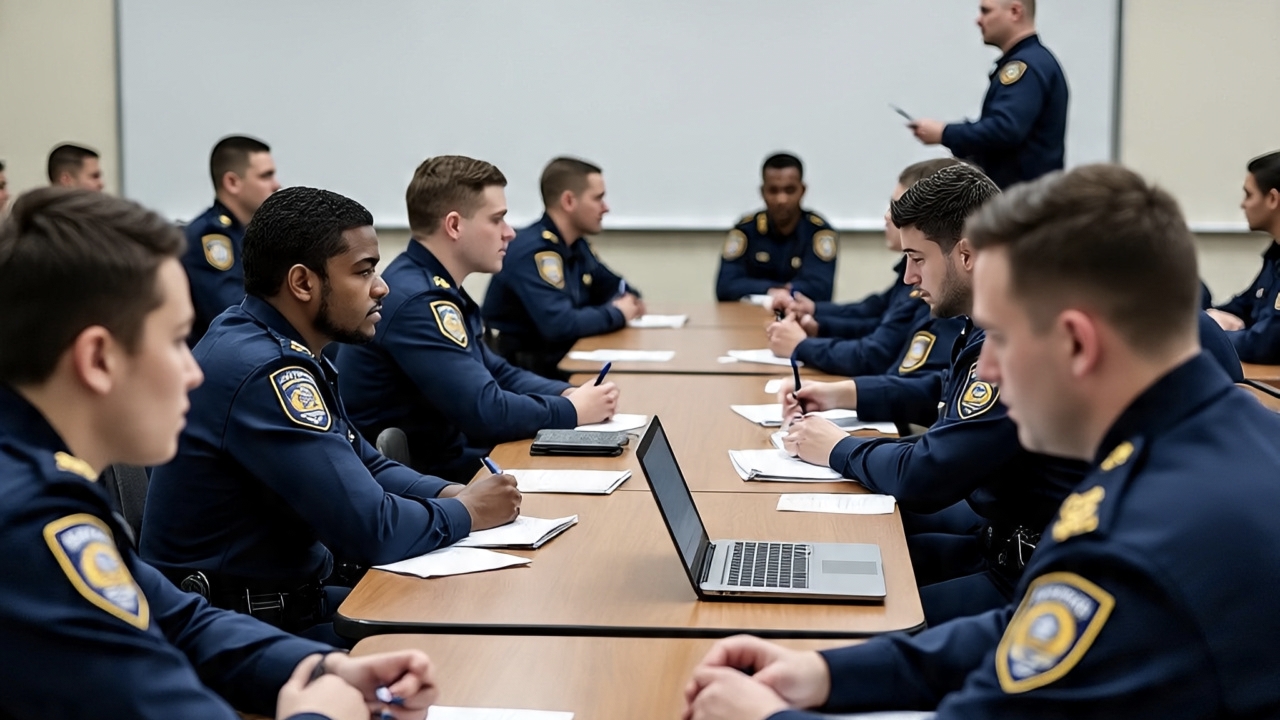
Police cadets are students pursuing careers in law enforcement while gaining real-world experience in public safety. By assisting department personnel in a variety of assignments, cadets develop practical skills that prepare them for the academy and beyond. A day in the life of police academy cadets involves the following:
Academic Class Attendance
Trainees engage in an educational program that facilitates the transition from civilian life to a law enforcement career. When attending classes, recruits must master legal and ethical subjects that form the foundation of their future duties. Structured classroom environments verify that every participant receives the same high-quality instruction throughout their tenure. The curriculum covers legal frameworks, including penal codes, criminal procedure codes, and traffic codes. Police departments emphasize professional standards; trainees study ethics and cultural diversity to better serve their community.
Physical Fitness Completion
Recruits participate in a structured training program, consistently demonstrating their physical abilities through exercises. The goal is to prepare them for the physical demands of law enforcement work and meet the high department standards. Trainees must maintain their health and stamina and show continuous improvement to succeed in physical challenges.
Successfully completing the physical fitness requirements is mandatory to graduate and progress to the field training program. Meeting the benchmarks confirms recruits have the necessary stamina for public service. The police academy provides the structure to help recruits achieve the required physical goals.
Defensive Tactic Practice
Defensive tactic practice provides trainees with the physical skills needed for self-protection and suspect control. The training in these techniques enables every recruit to manage physical encounters safely. Tactical practice bridges the gap between theoretical knowledge and practical application throughout the program. It may include the following elements:
- Interpersonal skill application
- Practical technique mastery
- Control method implementation
- Safety protocol adherence
The initial practice occurs in a controlled setting to prepare students for the realities of serving in the community. Defensive tactics focus on the strategic application of interpersonal skills and physical maneuvers. When recruits engage in these sessions, they learn to de-escalate situations or use the least amount of force to gain control. The practice involves repetitive movements that build muscle memory for high-pressure situations.
Firearms Proficiency Development
Academies train recruits to operate departmental weapons safely and accurately. Trainees spend time on the range where they receive expert guidance from firearm instructors; this phase of training prepares individuals for the high-stakes responsibilities they will face in the field. The department provides all the equipment needed for this development, including leather gear, ammunition, and weapons.
Trainees learn the mechanics of their firearms and the legalities surrounding the use of force while they practice their marksmanship. Accuracy is paramount when using firearms. The academy implements strict qualification standards that every participant must meet to move forward in the program. Once they demonstrate proficiency in static and dynamic environments, students are better prepared for real-life situations.
Disciplined Schedule Maintenance
Recruits must treat their time at the academy as a professional full-time job. They adhere to standard workweek hours while remaining flexible, as the training schedule may change based on instructional needs. Every participant must be punctual for every session. The program’s structure covers all state-mandated topics within the allotted time frame; some sessions may require attendance during the evening or on weekends. Commitment to the program demonstrates a recruit’s ability to handle the demanding nature of a career in law enforcement.
Start at a Police Academy
During the program, recruits engage in simulated real-world situations to apply their classroom knowledge. They practice the skills they need during high-stress situations to react calmly and safely. Contact a reputable government law enforcement agency to learn more about their recruiting programs.