Meta Description: Learn 9 practical steps to organize construction materials on-site, reduce waste, and improve efficiency for any build project.
Keeping construction materials organized isn’t glamorous work—but it makes every other part of a project run smoother. A disorganized site wastes time, increases costs, and raises the risk of accidents. Whether you’re managing a large commercial build or a residential renovation, having a clear system in place from day one pays dividends throughout the project.
Here are nine practical steps to get your construction materials organized and keep them that way.
1. Conduct a Full Inventory Before the Project Begins
Before a single nail is driven, you need to know exactly what materials you have on hand. Walk through your storage area and document everything—quantities, conditions, and locations. This baseline inventory prevents duplicate orders, reduces waste, and helps you identify what still needs to be sourced. A simple spreadsheet works well for smaller projects, while larger builds may benefit from dedicated inventory management software.
2. Categorize Materials by Type and Phase
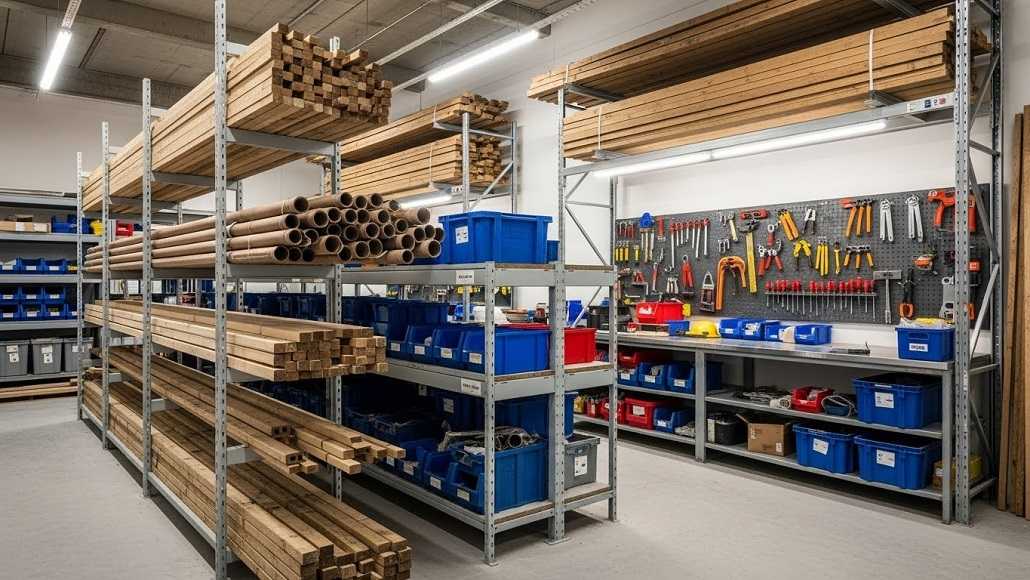
Group materials according to their type (lumber, hardware, electrical, plumbing) and the phase of construction in which they’ll be used. Foundation materials shouldn’t be mixed in with roofing supplies, and framing hardware shouldn’t be buried under finishing materials. Clear categorization means your crew spends less time hunting for what they need and more time actually building.
3. Label Everything Clearly
Labeling is one of the simplest organizational tools available—and one of the most overlooked. Use durable, weather-resistant labels on bins, pallets, and storage zones. Include the material name, quantity, and project phase. On larger sites, color-coded labels can further speed up identification. When anyone on the crew can locate materials at a glance, productivity improves across the board.
4. Designate Specific Storage Zones on Site
Map out your site and assign dedicated storage areas for different material categories. High-use items should be stored closest to the work area, while less frequently needed materials can go further back. Keep hazardous materials—like adhesives, solvents, and treated lumber—in separate, clearly marked zones with appropriate safety signage. A well-planned site layout reduces unnecessary movement and minimizes the risk of materials being damaged or misplaced.
5. Protect Materials from Weather and Damage
Construction materials represent a significant financial investment. Protecting them from the elements is non-negotiable. Cover materials susceptible to moisture damage—like drywall, lumber, and insulation—with tarps or store them in weatherproof containers. Elevate materials off the ground to prevent water damage from pooling. On longer projects, consider investing in a covered storage structure to reduce material losses over time.
6. Use a Reliable Transport Solution for Moving Materials
Even the best-organized storage system falls apart if you can’t move materials efficiently around the site. A quality utility trailer in Salt Lake City can make a significant difference in how smoothly materials get from storage to the work area. Lightweight aluminum utility trailers, in particular, are popular on construction sites because they’re easy to maneuver, resistant to corrosion, and capable of handling substantial loads without adding excessive weight to the tow vehicle.
7. Implement a Check-Out System for Materials
Treat your material storage like a library. When workers pull materials from storage, they should log what was taken, how much, and for what purpose. This keeps your inventory accurate in real time and helps you identify patterns—like which materials are being used faster than expected, or where waste is occurring. Even a simple sign-out sheet can make a measurable difference in material accountability.
8. Schedule Regular Inventory Audits
Don’t wait until you run out of something critical to check your stock levels. Schedule regular inventory audits—weekly on active sites, or at key project milestones. Cross-reference what’s on the site against your original inventory list and adjust your procurement plan accordingly. Regular audits also help you catch damaged or misplaced materials before they become a bigger problem.
9. Dispose of Waste and Unused Materials Promptly
Cluttered sites are disorganized sites. Establish a clear process for disposing of off-cuts, packaging, and unused materials as the project progresses. Separate recyclable materials from general waste, and consider donating usable surplus materials to local building programs or salvage organizations. Not only does this keep the site tidy, but it can also reduce disposal costs and support sustainability goals.
Organizing construction materials takes upfront effort, but the payoff is a safer, more efficient, and more cost-effective project. Start with a solid inventory, build out your storage system thoughtfully, and maintain it consistently throughout the build. Small organizational habits—like labeling, zoning, and regular audits—compound over time into significant gains in productivity and profitability.