


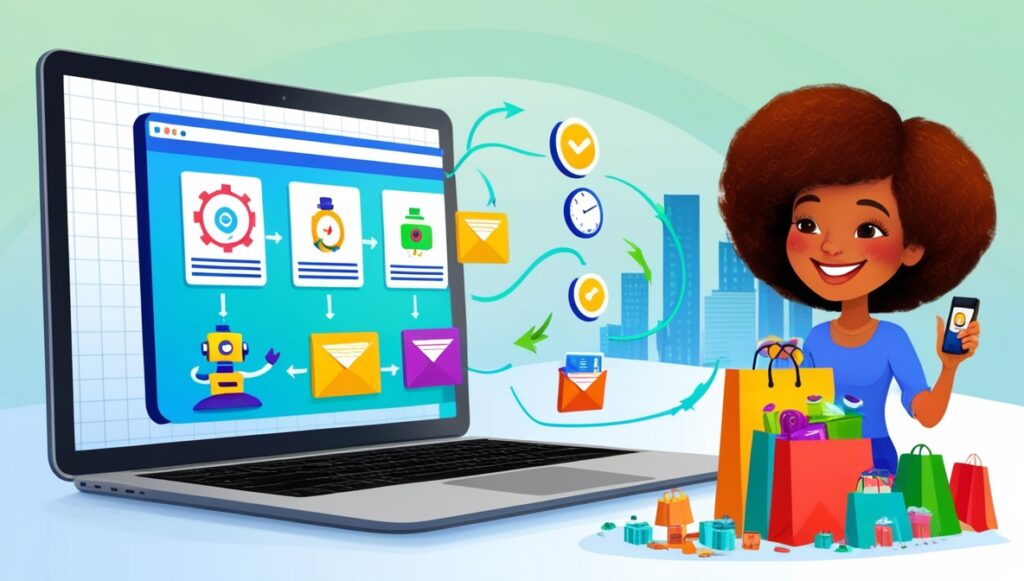
Getting a customer to buy once is great but getting them to come back again and again? That’s where the real profit lies.
For e-commerce businesses, repeat purchases are critical to growth. It’s cheaper to retain an existing customer than to acquire a new one, and loyal customers tend to spend more over time. But how do you keep them engaged after that first sale?
The answer lies in email automation a powerful tool that helps you re-engage buyers, nurture relationships, and drive recurring revenue. And when paired with tools like the WhatsApp Business API, the results can be game-changing.
Let’s break down how to use email automation to drive repeat purchases and how WhatsApp can supercharge your strategy.
Why Repeat Purchases Matter in E-Commerce
Before we dive into the “how,” let’s talk about the “why.”
- Customer acquisition cost (CAC) is rising across all channels.
- Studies show that repeat customers spend up to 67% more than new customers.
- The probability of selling to an existing customer is 60-70%, compared to just 5-20% for a new lead.
In short, loyal customers = sustainable revenue.
But loyalty doesn’t happen by chance—it happens when you create an intentional, personalized experience after the first sale. That’s where email automation comes in.
What Is Email Automation?
Email automation allows you to send targeted messages to your customers based on their behavior, preferences, and interactions without manually sending emails each time.
For e-commerce, this might include:
- Post-purchase follow-ups
- Replenishment reminders
- Personalized product recommendations
- Birthday or anniversary discounts
- Win-back campaigns for inactive customers
You set it up once, and it works 24/7.
Step-by-Step: Using Email Automation to Drive Repeat Sales
Let’s walk through how to use email automation effectively to boost repeat purchases.
Step 1: Map the Post-Purchase Journey
The key to retention is delivering value after the first sale. Start by mapping what your customer needs after purchase.
Ask yourself:
- When will they run out of the product?
- What complementary items would enhance their experience?
- How long should I wait before following up?
Then create automated flows to match these needs.
Step 2: Set Up Key Automation Sequences
Here are five email flows you can set up right now to drive more repeat sales:
1. Post-Purchase Thank You + Review Request
Send a thank you email after purchase, followed by a review request. Include:
- Confirmation details
- Product care tips
- Links to leave a review
Bonus: Offer a discount code for their next purchase to encourage a second order.
2. Replenishment Reminders
Perfect for consumables like supplements, cosmetics, pet food, or coffee.
Example: If someone bought a 30-day supply of skincare serum, schedule a reminder 25 days later to reorder.
3. Cross-Sell & Upsell Recommendations
Send personalized suggestions based on what they already bought.
Example: “Customers who bought [X] also loved [Y]” or “Complete your set with these matching accessories.”
4. Exclusive Loyalty Offers
Reward return customers with exclusive deals.
- Offer VIP early access to new collections
- Send a “You’re one of our favorites” email with a special discount
5. Win-Back Campaigns
Target customers who haven’t purchased in a while with automated re-engagement emails.
Example: “It’s been a while! Here’s 15% off to bring you back.”
Step 3: Segment for Personalization
One-size-fits-all emails don’t work anymore. Segmentation allows you to tailor your automation based on:
- Purchase history
- Time since last order
- Cart value
- Location
- Behavior (opened emails, clicked links, etc.)
The more relevant your emails are, the more likely customers are to buy again.
Integrating the WhatsApp Business API for Even Better Results
Now, let’s talk about the secret weapon: WhatsApp Business API.
While email remains a top performer, open and engagement rates on WhatsApp are even higher—up to 90%+ open rates and rapid response times. When combined with email automation, it creates a powerful omnichannel experience.
What Is the WhatsApp Business API?
The WhatsApp Business API allows e-commerce businesses to:
- Send transactional notifications (order confirmations, shipping updates)
- Deliver personalized product suggestions
- Follow up with cart reminders
- Provide customer support through chat
- Send promotional messages (with user consent)
How It Enhances Repeat Purchase Campaigns
Here’s how to use WhatsApp to complement your email automation:
1. Faster Follow-Ups
Not everyone checks email daily. Use WhatsApp to follow up on key emails:
- “Hey, we sent you a reminder about restocking your supplements—click here to reorder.”
2. Abandoned Cart + One-Click Buy
Combine your email abandoned cart sequence with a WhatsApp nudge:
- “Still thinking it over? Your cart is waiting! Complete your order here: [link]”
With one-tap deep links, users can jump directly to checkout.
3. Replenishment + Product Tips
Use WhatsApp to remind customers it’s time to reorder AND offer quick usage tips or video tutorials.
4. Offer Flash Sales and VIP Alerts
Use WhatsApp to send real-time notifications about limited-time deals, restocks, or early access.
Important: You must have user opt-in to send promotional messages via WhatsApp. Always follow WhatsApp’s guidelines.
Best Practices for Combined Email & WhatsApp Automation
To make this strategy work, follow these tips:
1. Sync Data Across Platforms
Ensure your email marketing platform and WhatsApp API provider are integrated or share a common CRM. This ensures consistent messaging and targeting.
2. Use a Unified Strategy
Don’t duplicate messages across both channels. Use email for detailed content and WhatsApp for quick nudges or time-sensitive alerts.
3. Prioritize Consent
For WhatsApp, opt-in is essential. Add checkboxes during checkout, signup forms, or pop-ups allowing users to opt into WhatsApp updates.
4. Automate Responsibly
Avoid spamming users. Use automation to add value, not just to sell. Be helpful, timely, and relevant.
Tools to Help You Get Started
- Email Platforms: Klaviyo, ActiveCampaign, Mailchimp, Drip
- WhatsApp API Providers: MSG91, WATI, Zoko, 360dialog, Gupshup
- CRM/Automation Tools: HubSpot, Zoho, Salesforce (with WhatsApp integration)
Choose tools that integrate smoothly so your workflows are seamless.
Driving repeat purchases doesn’t require guesswork—it requires strategy, automation, and the right tools. Email automation helps you stay top of mind with personalized, well-timed communication. Layering in WhatsApp Business API gives you another powerful channel to engage users instantly and drive them back to your store.
In today’s noisy digital world, the brands that win are the ones that build meaningful, ongoing relationships. Start with email, add WhatsApp, and watch your repeat purchase rate grow.